
The biggest backyard design mistakes happen when you focus too much on individual features instead of the experience of the yard as a whole. Trying to fit in too much, planning around a lifestyle you do not actually live, and treating lighting or atmosphere as an afterthought can leave even an expensive yard feeling disconnected or underused.
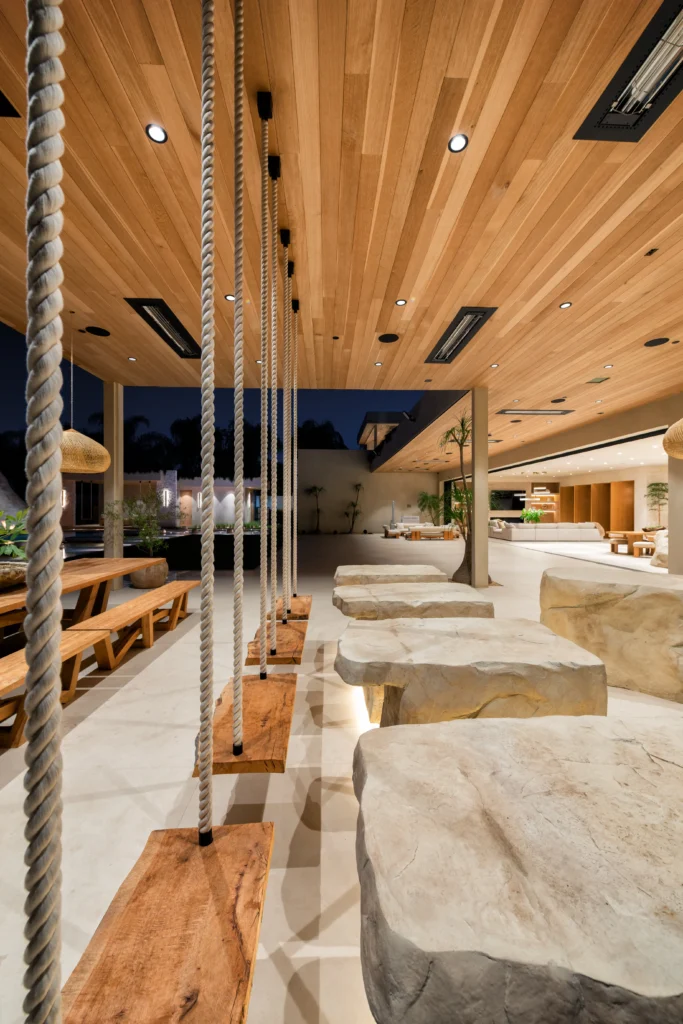
The most common backyard design mistakes happen when homeowners focus too heavily on individual features instead of how the entire outdoor space feels and functions together.
— A backyard should feel connected instead of divided into disconnected zones.
— Layout and flow matter more than simply adding more features.
— Smaller spaces suffer the most when the design becomes overcrowded.
— Lighting, atmosphere, and comfort shape how often the yard actually gets used.
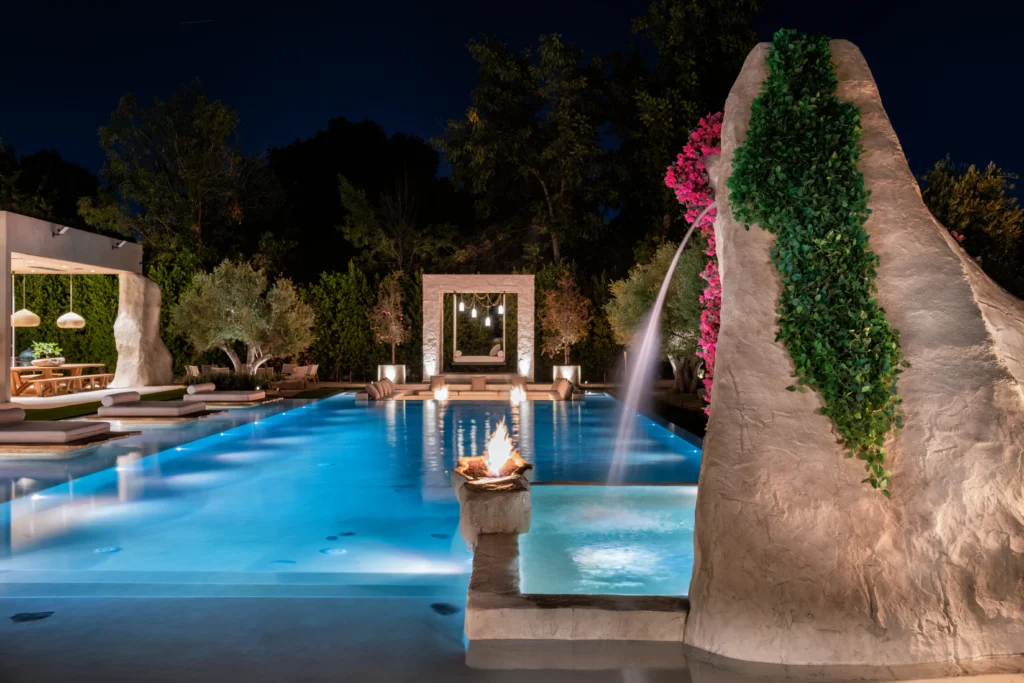
A backyard usually feels unsuccessful when the layout does not support how people naturally want to live, move, gather, and spend time outside.
Pools, seating, kitchens, and gathering areas should feel connected instead of isolated from one another.
Larger features do not automatically create a more luxurious outdoor space.
Some yards photograph well but feel uncomfortable or impractical once people actually start using them.
Without thoughtful lighting and layered design, many outdoor spaces completely lose their energy at night.
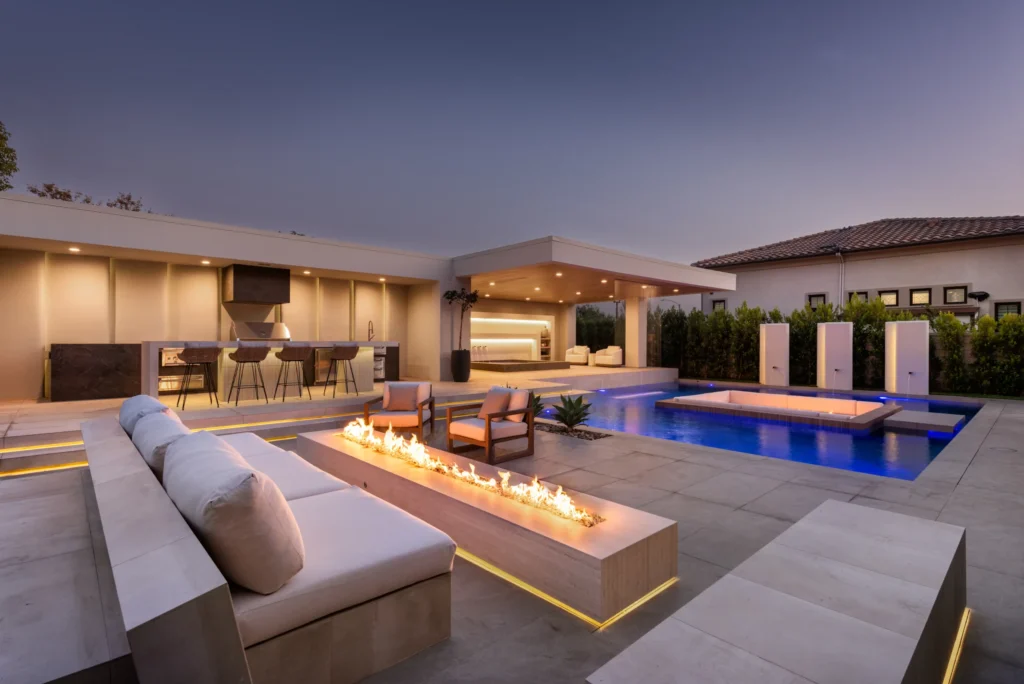
A larger budget does not automatically create a better outdoor space.
In fact, some of the most underwhelming yards we see include expensive pools, large patios, outdoor kitchens, and high-end materials. But even with all of those elements, the space still feels disconnected once everything is built.
Usually, that happens because the design process focused too heavily on individual features instead of the overall experience of being outside.
The most successful outdoor spaces create movement, atmosphere, connection, and comfort. The layout guides you naturally through the yard. The lighting changes the mood at night. Seating areas feel intentional. Water, landscaping, and architecture work together instead of competing for attention.
That’s what makes a backyard feel immersive instead of feeling like a collection of separate elements placed next to each other.
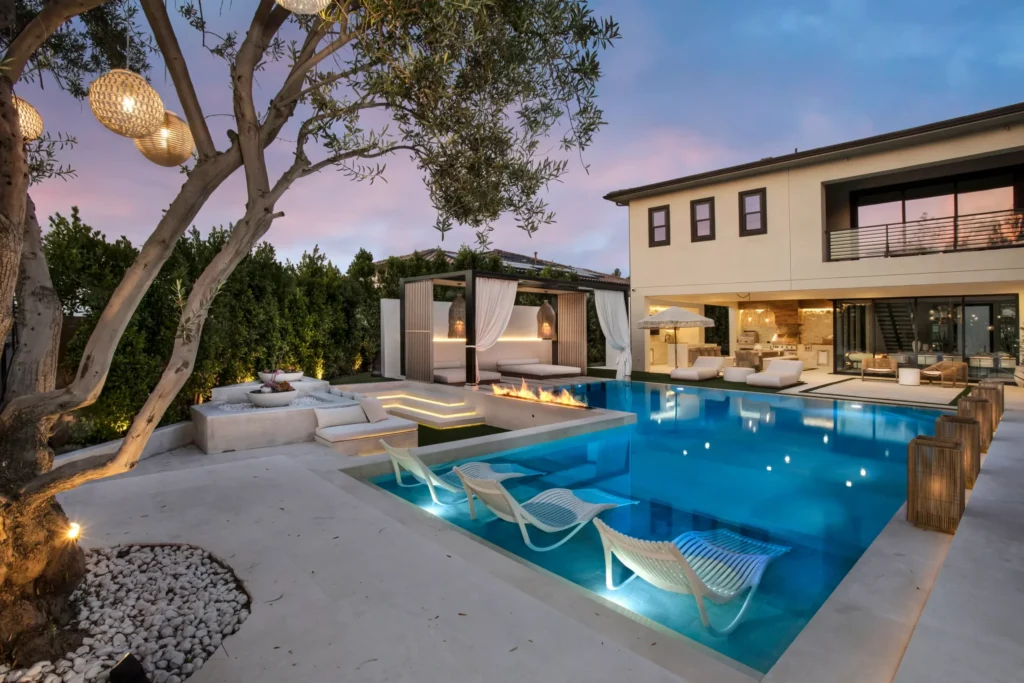
Layout shapes almost everything about how a backyard feels once it’s built.
It determines how people move through the space, where they naturally gather, what catches their attention first, and how connected the yard feels overall.
A strong layout creates natural movement between spaces without forcing people to constantly reset or relocate throughout the yard.
That’s often what makes resorts feel so immersive.
You move naturally from water to seating to dining to shade without thinking about it. Everything feels connected and easy to use.
When the layout works well, the entire outdoor experience starts feeling effortless.
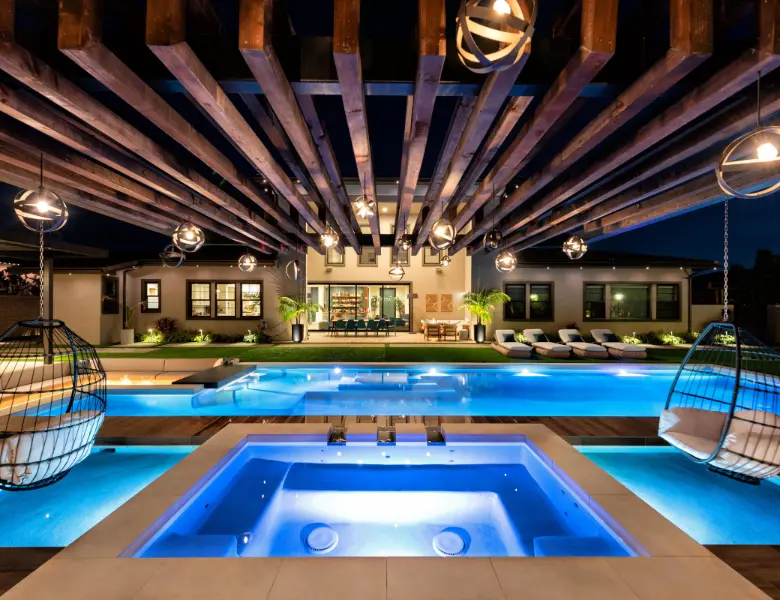
The most successful backyards rarely feel over-designed.
They feel natural to move through. Comfortable to spend time in. Easy to use throughout the day and into the evening.
That feeling usually comes from intentional decisions happening beneath the surface.
The layout supports movement. Seating feels connected to the surrounding environment. Lighting creates atmosphere instead of simply illuminating the yard. Water, landscaping, and architecture all reinforce the same emotional experience.
When those layers work together, people stay outside longer without even thinking about it.
That’s usually the clearest sign the design is working.
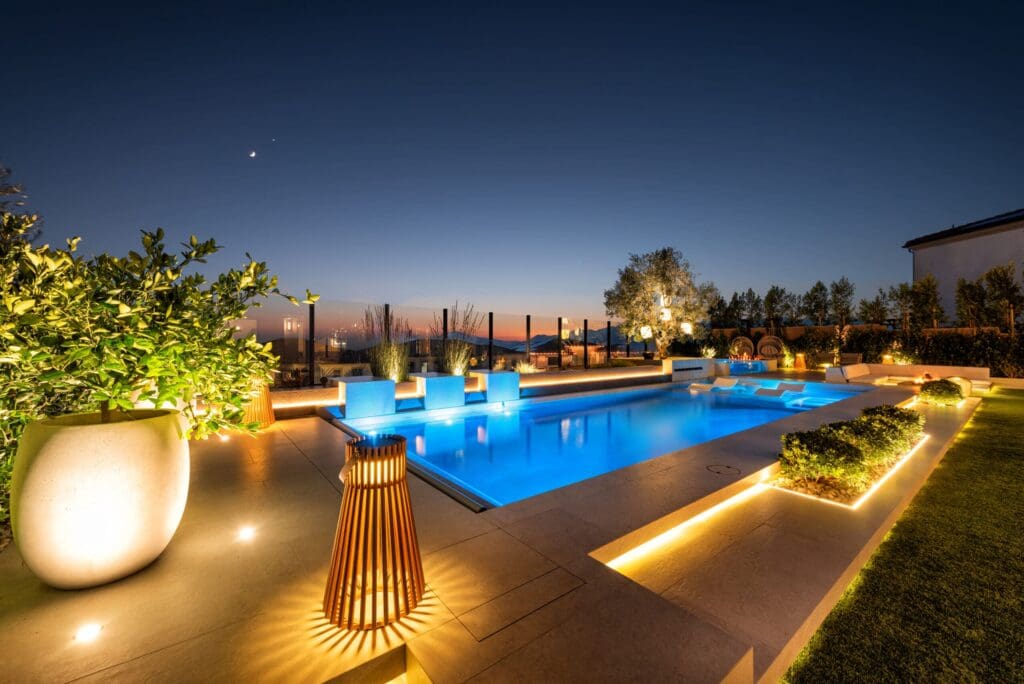
— Layout supports how people naturally gather and move
— Features feel visually and emotionally connected
— Lighting extends the experience into the evening
— Seating areas feel integrated into the environment
— Water, landscaping, and architecture work together cohesively
— The yard feels immersive and calming
— The space gets used consistently
— Features compete for attention instead of working together
— Oversized elements dominate the layout
— The yard feels crowded or disconnected
— Lighting feels minimal or purely functional
— Seating areas feel randomly placed
— Every zone feels separate from the next
— Parts of the yard go unused most of the time
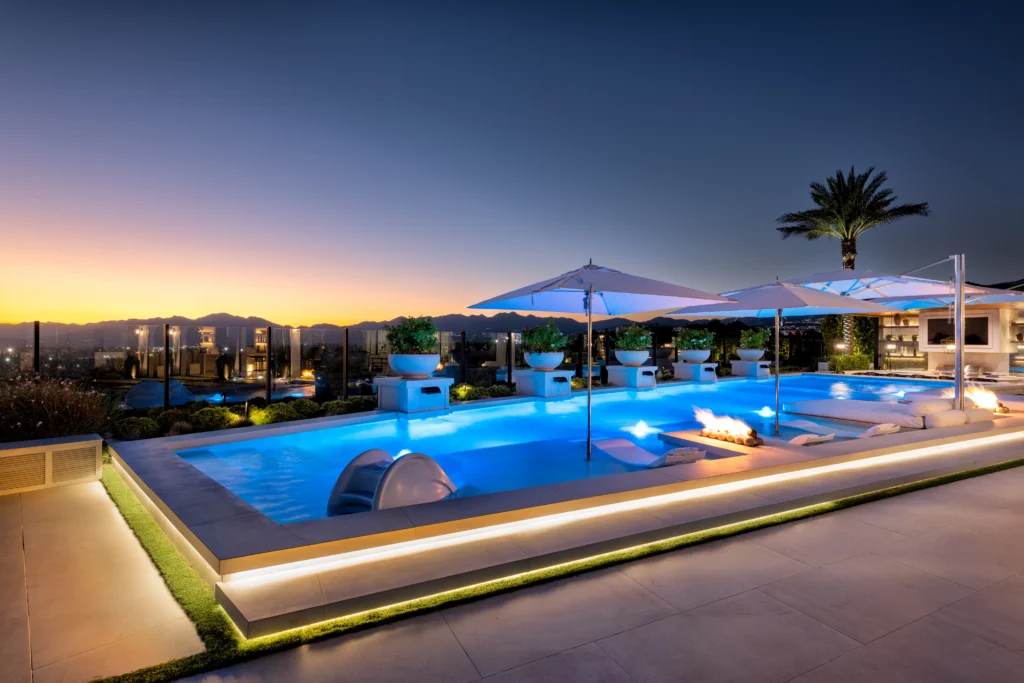
The most common backyard mistakes are usually not construction mistakes.
They’re experience mistakes.
One of the biggest mistakes homeowners make is approaching the yard like a checklist.
A pool. A fire pit. An outdoor kitchen. A seating area.
Individually, those features may all look great. But when they are designed separately instead of as one connected environment, the yard starts feeling fragmented.
At Foxterra, we approach outdoor spaces more holistically. We think about how someone moves through the yard, what they see when they step outside, where people naturally gather, and how each area connects emotionally and visually to the next.
That’s usually the difference between a backyard that simply looks expensive and one that actually feels immersive.
A lot of homeowners assume luxury means adding more.
More seating. More features. More structures. More hardscape.
But overcrowding is one of the fastest ways to make a backyard feel stressful and visually compressed.
This becomes especially noticeable in smaller yards where every design decision carries more visual weight.
We often see layouts where oversized furniture, giant patios, or large pool designs dominate the entire yard and leave almost no room for circulation, landscaping, or atmosphere.
The strongest outdoor spaces usually feel intentional because they leave room to breathe.
Restraint matters just as much as the features themselves.
This is one of the most common mistakes we see.
One of the biggest mistakes is planning a yard around things you probably will not use. An oversized dining area does not make sense if you rarely host large dinners, and a feature you loved online may not make sense for the way your family actually spends time outside.
The best outdoor spaces support your actual routines.
If you spend most evenings quietly by the pool, the design should support that. If your family naturally gathers around fire features or spends hours in the water, those experiences should shape the layout from the beginning.
Luxury outdoor design feels effortless when it aligns with how you already live.
A backyard should not stop working when the sun goes down.
But many outdoor spaces feel flat or lifeless at night because lighting was treated as an afterthought instead of part of the overall experience.
At Foxterra, lighting plays a major role in how we shape atmosphere, movement, and immersion throughout a yard. Pools glow differently. Water features feel more dramatic. Pathways feel intentional. Gathering spaces become warmer and more inviting.
Without layered lighting, even beautiful outdoor spaces can lose their emotional impact completely after sunset.
And often, that’s when homeowners actually want to use the yard most.
Some outdoor spaces look impressive immediately but lose their impact quickly because there’s no emotional connection to the experience of being there.
The best backyards create discovery, movement, and atmosphere.
You notice something new as you move through the space. Water softens the environment. Elevation changes create transitions. Pathways guide you deeper into the yard. Seating areas feel immersive instead of exposed.
That emotional layer is often what separates a backyard that simply looks expensive from one that genuinely feels unforgettable.
One of the biggest mistakes is designing feature-by-feature instead of thinking about how the entire outdoor space should feel and function together.
Often, the layout lacks connection, atmosphere, or intentional flow between spaces. Even expensive features can feel disconnected without cohesive design.
Strong layouts, layered lighting, integrated seating, landscaping, and intentional transitions between spaces all help create a more immersive outdoor experience.
Layout should always come first. The placement and relationship between features shapes how the yard actually gets used.
Many outdoor spaces are designed around appearance instead of real lifestyle habits, comfort, atmosphere, and flow.

Founder & Creative Director
Founder Justin Fox grew up with a passion for landscaping. After 15+ years building luxury yards and pools as a licensed contractor, he saw the limits of the design/build model. Homes get detailed, architect-led plans, so why shouldn’t yards? In 2019 he convinced brother Nate Fox to join him and launched Foxterra Design to focus on immersive, luxury outdoor spaces.

Designer
Nate Fox helps shape Foxterra’s creative vision, blending architectural detail with a designer’s eye for proportion and flow. His work redefines the backyard as an extension of modern luxury living.
In recent features, Nate’s perspective has been quoted across leading design publications, including Homes & Gardens and Luxury Pools + Outdoor Living, where he shares practical, design-forward guidance on everything from integrating sculptural moments and sightlines to creating “living wall” effects that soften hard architecture and make compact spaces feel more expansive.
For this article, Nate explores how movement, flow, lighting, and emotional experience shape the difference between a backyard that simply looks good and one that feels effortless to live in every day.
We can’t wait to start exploring the potential in your yard.
Here’s what to expect next:
You’ll hear from our team within 24-48 business hours to schedule your free Design Consultation Call. You’ll get the chance to tell us more about your project and what you’re looking for in your new private resort.
If you have any questions before then, send us an email at: connect@foxterradesign.com
We require a minimum construction budget of $200,000, so unfortunately, we don’t have a design package that fits your needs at this time.
Feel free to reach out with any questions connect@foxterradesign.com and we’d love to stay connected on social media. Follow us @foxterradesign on Instagram, TikTok, and YouTube for a look at our latest designs.
