Key Takeaways:
A backyard like this works when the limitations are used as part of the design instead of something to work around.
— Use utility elements as a design feature. Retaining walls can define the space when they’re given texture, depth, and purpose.
— Layer the space vertically. Elevation changes, planters, and sunken areas make a small yard feel larger.
— Bring in lighting early. It changes how the space feels at night and adds depth you don’t get during the day.
— Focus on how the space is used. Seating, shade, and connection between areas matter more than square footage.
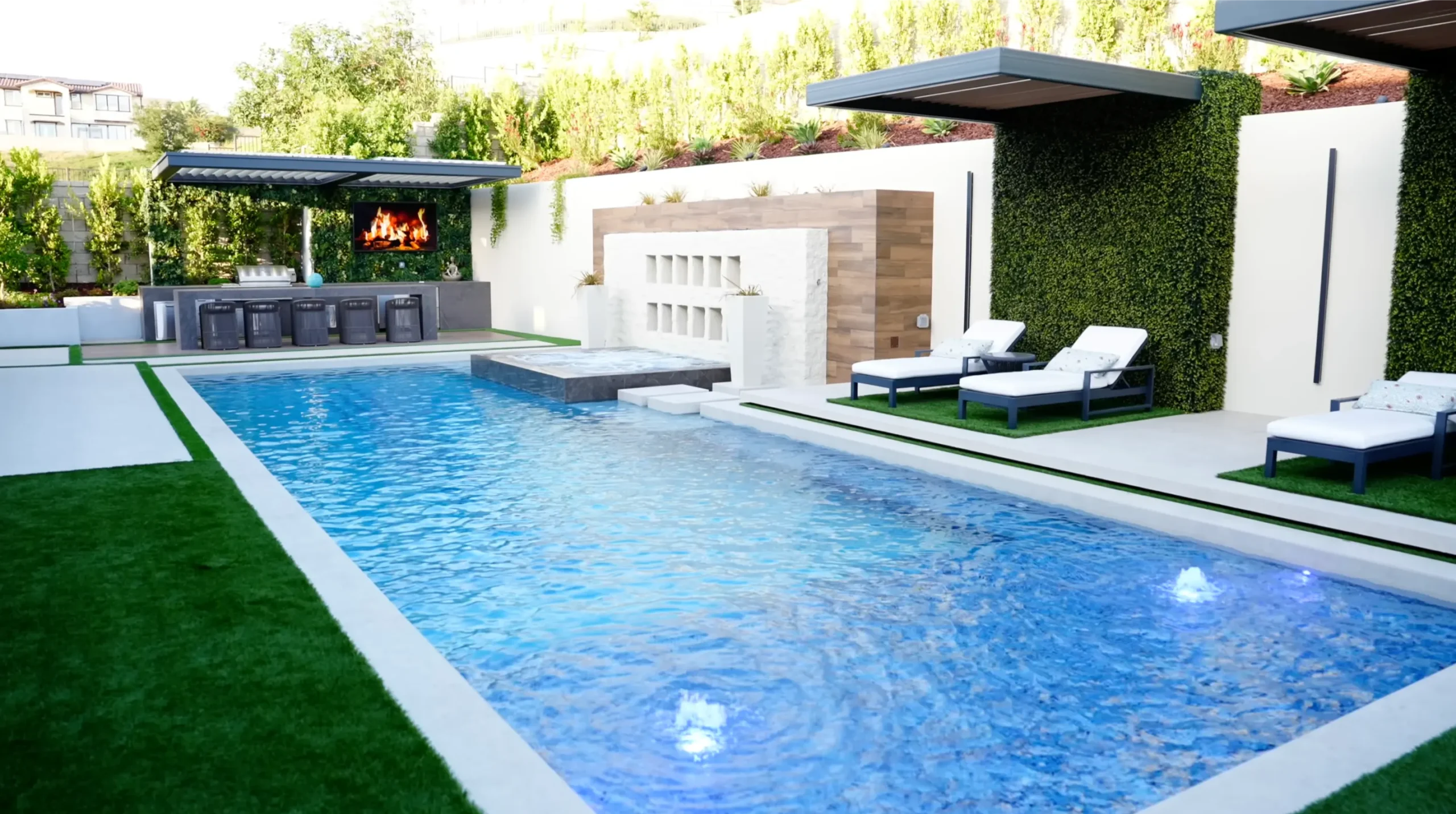
This project started with a backyard that didn’t feel like it had much potential.
There was a steep slope, a short retaining wall, and a narrow strip of usable space between the house and the back wall. It felt tight, limited, and disconnected from the kind of experience the homeowners wanted.
Now it’s a fully built-out backyard that feels like a resort.
The difference came from how the constraints were used, not avoided.
Starting With A Space That Felt Limited
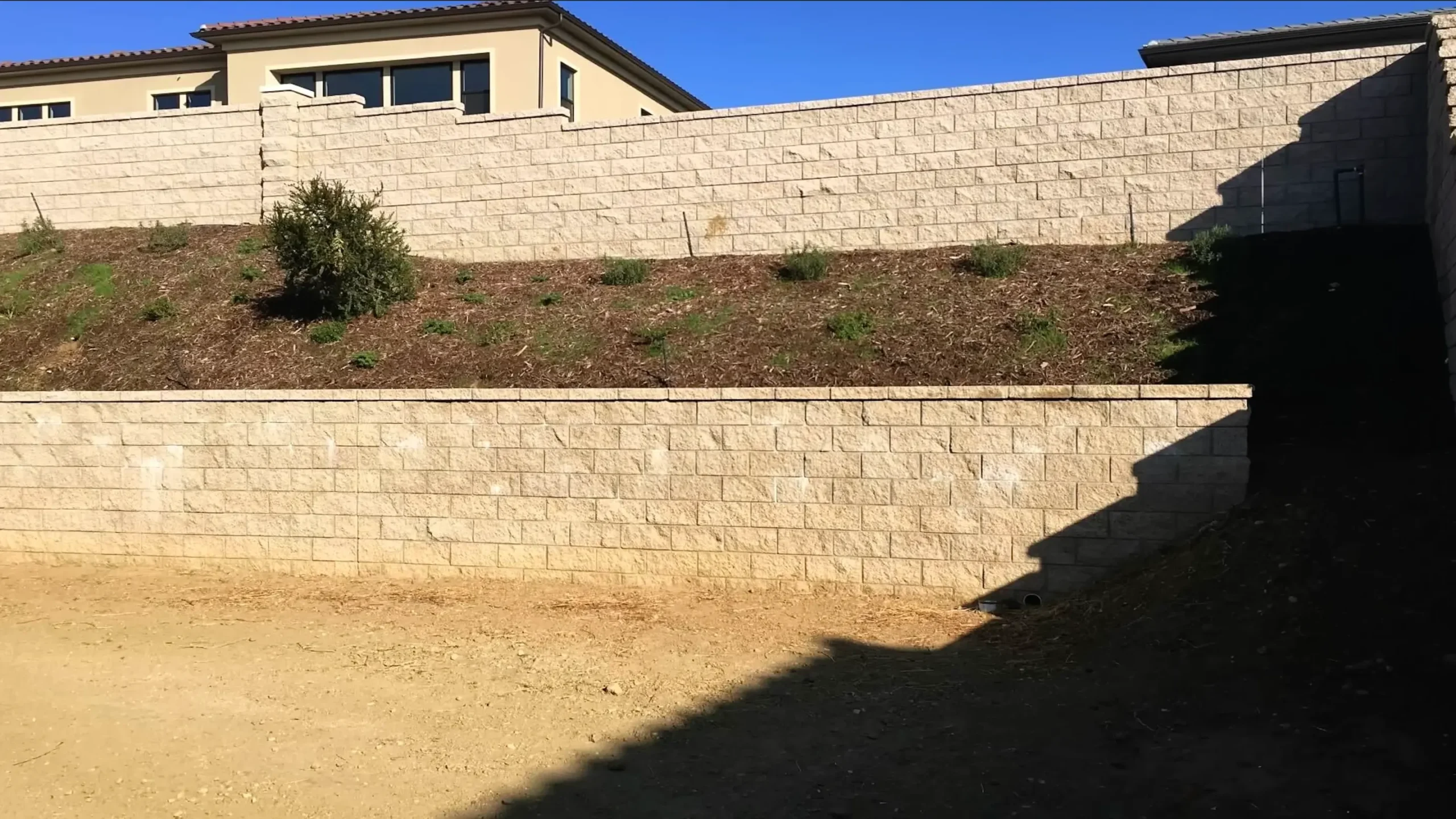
The original yard had three main challenges:
– A steep grade change
– A retaining wall that didn’t add anything visually
– Very little depth to work with
There wasn’t an obvious place for gathering, no natural focal point, and no sense of flow. This is the exact situation most people run into when trying to figure out how to make a sloped backyard look good without losing usable space.
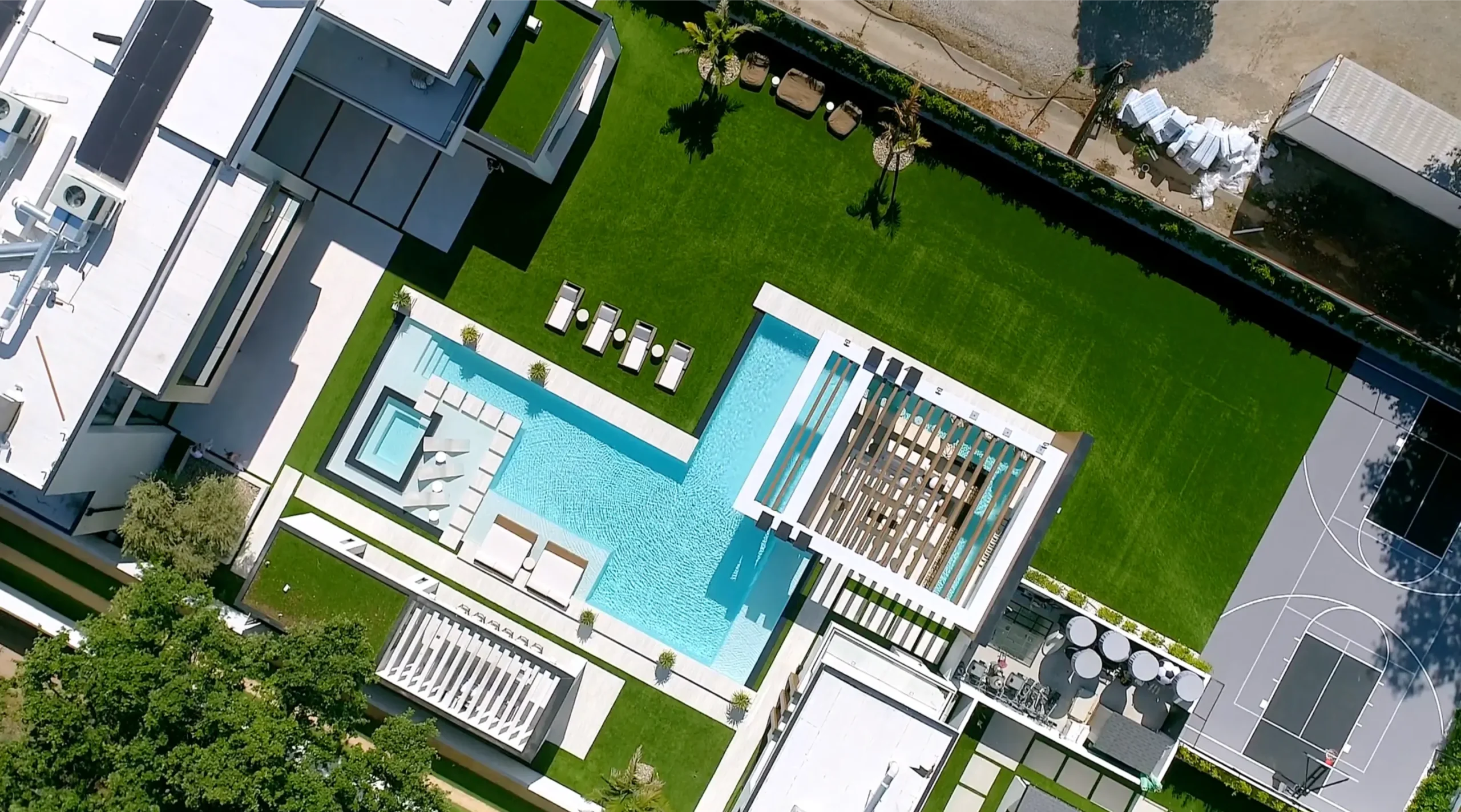
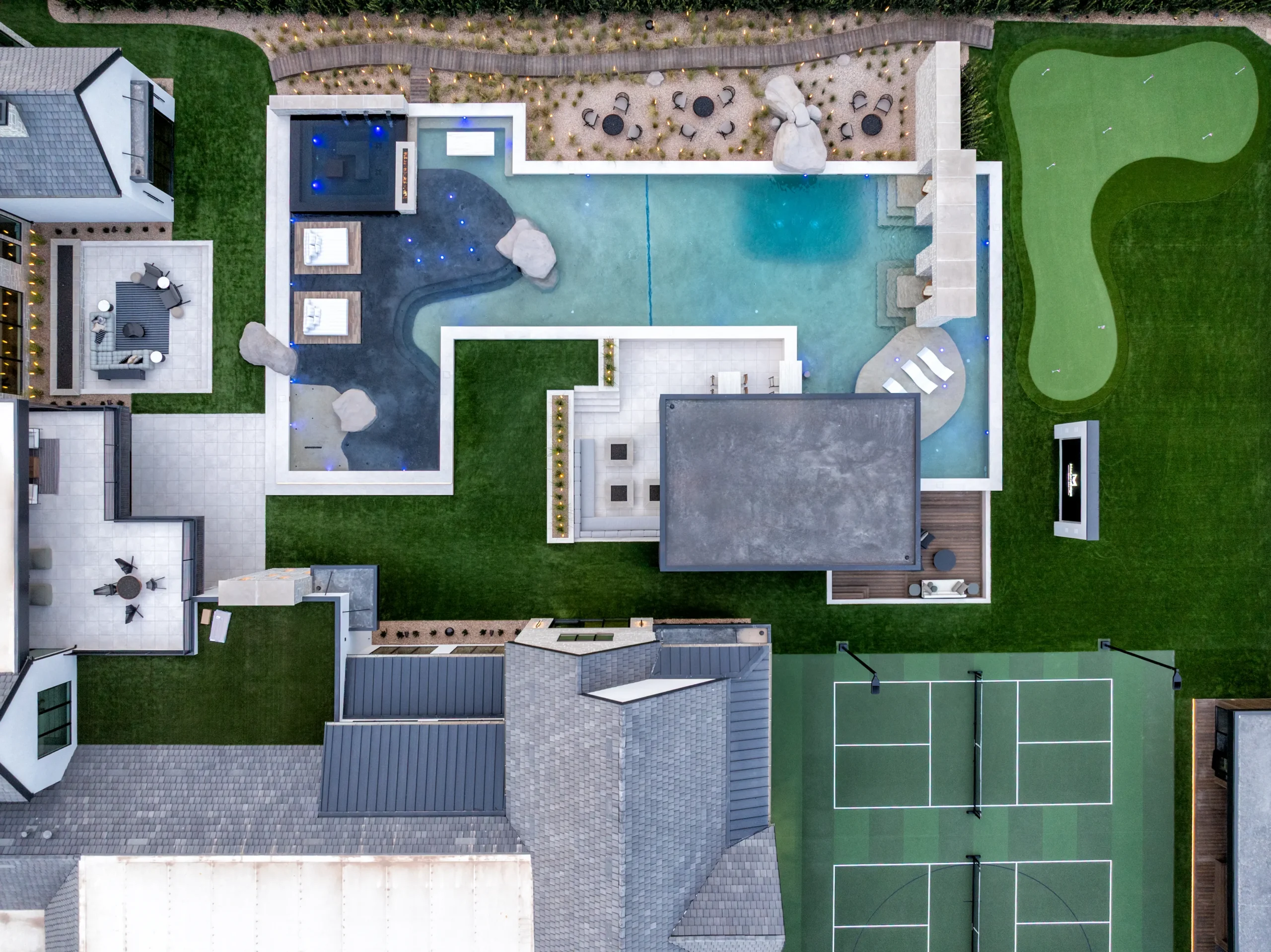
As construction started, the shape of the space began to take form with the pool, the sunken seating area, and the retaining wall adjustments. But the real shift happened when each feature was designed to work together instead of competing for space.
Designing Around the Constraints
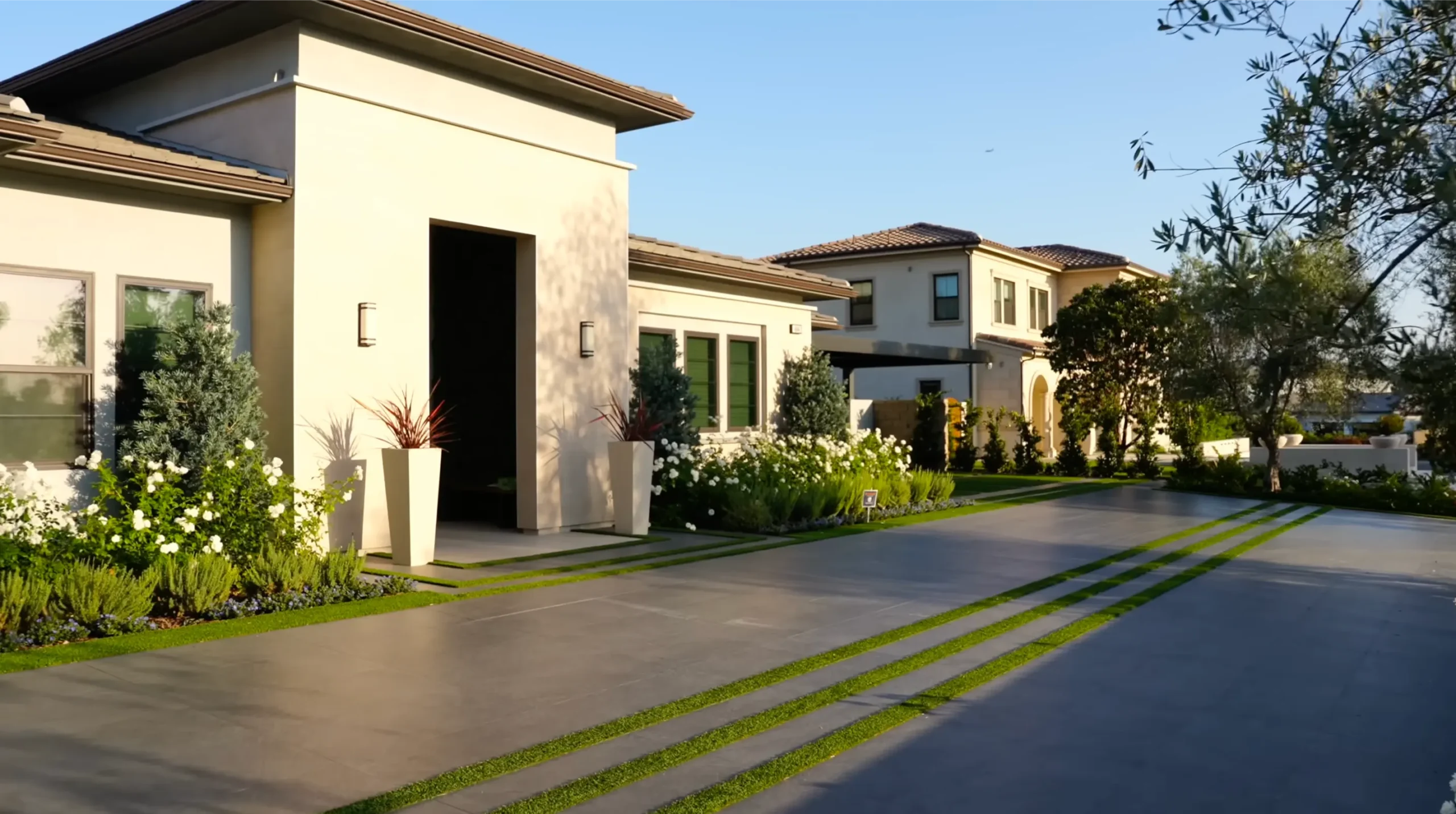
Instead of trying to minimize the wall or hide it, the design leans into it.
That decision defines the entire backyard. This is really the shift in how to design a backyard with a retaining wall. Instead of treating it as a problem, it becomes the structure that everything else builds off of.
The wall becomes structure, backdrop, and focal point all at once. It sets the tone for everything else in the space.
From there, every element is layered intentionally.
Patio Cover and Bar Area
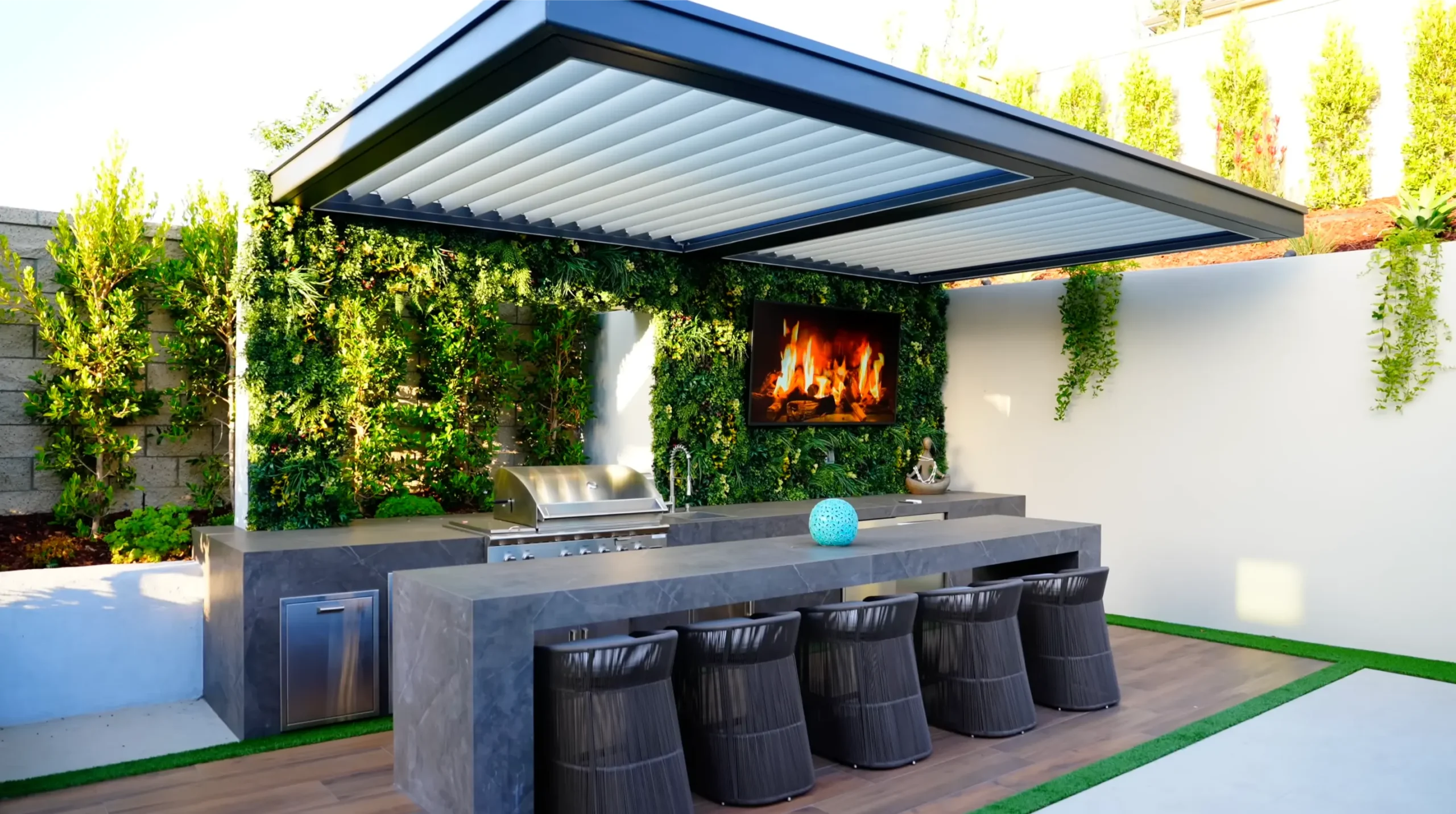
The bar and patio cover create a strong anchor on one side of the yard.
There’s a large vertical surface here, so instead of leaving it flat, a faux plant wall is added to bring in texture and soften the feel. It breaks up the hardscape and adds contrast without requiring maintenance.
The patio cover itself adds flexibility. It can open and close depending on sun or weather, which makes the space usable throughout the day.
It’s a high-end feature, but the concept applies at any level. Shade, coverage, and vertical texture all help smaller spaces feel more complete.
California Room Transformation
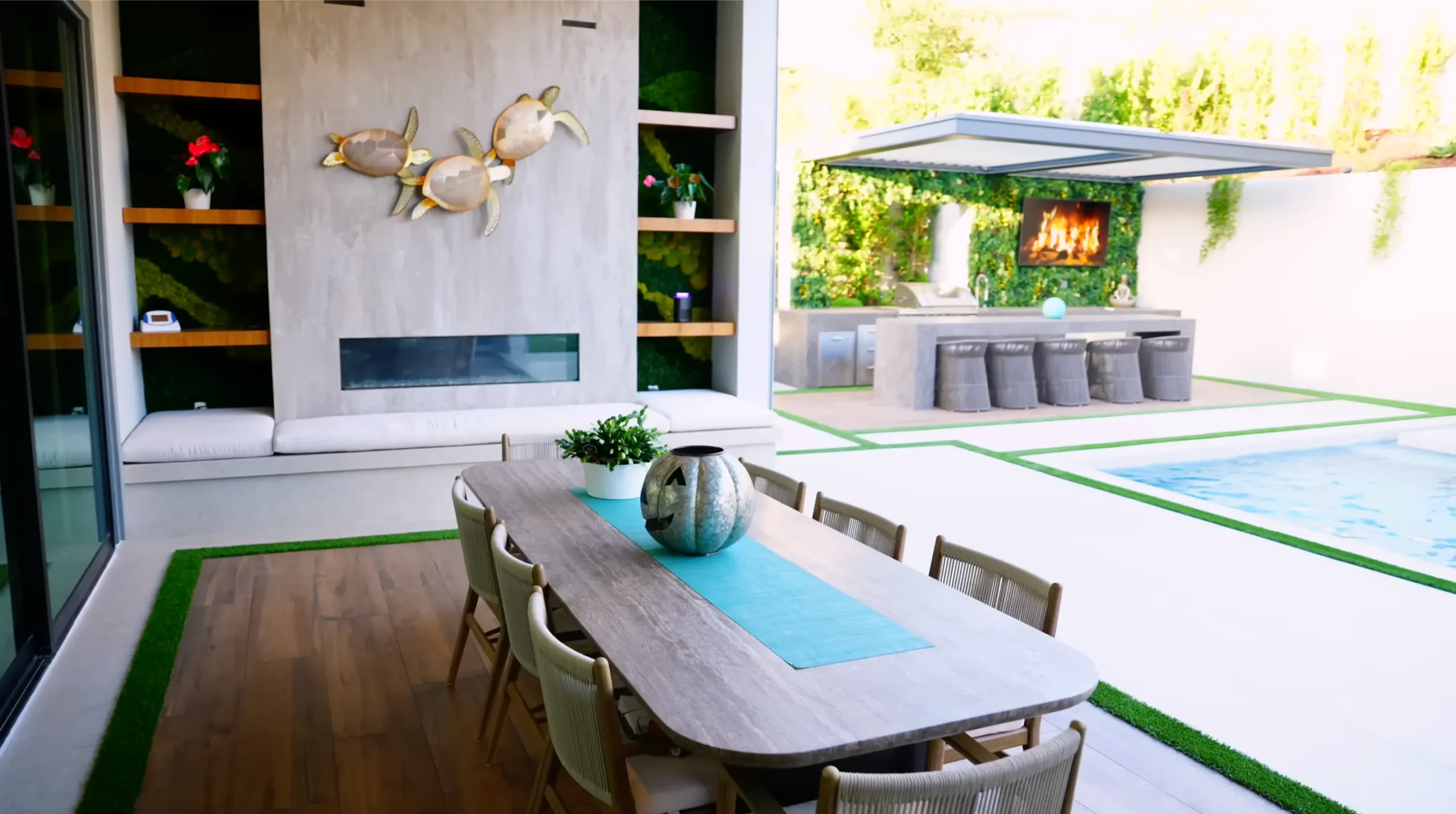
This area started as a plain wall with no depth or function.
Now it includes:
– A custom plaster finish with texture
– Floating shelves for dimension
– Built-in storage within the seating
– A moss installation used as an artistic detail
The flooring was also reworked to feel more intentional.
Instead of basic concrete, the space is framed like an outdoor rug using turf and porcelain wood tile that ties back to the interior finishes. It creates a defined dining area without needing more square footage, which is one of the more effective small backyard retaining wall ideas when space is tight.
Sunken Fire Pit Seating
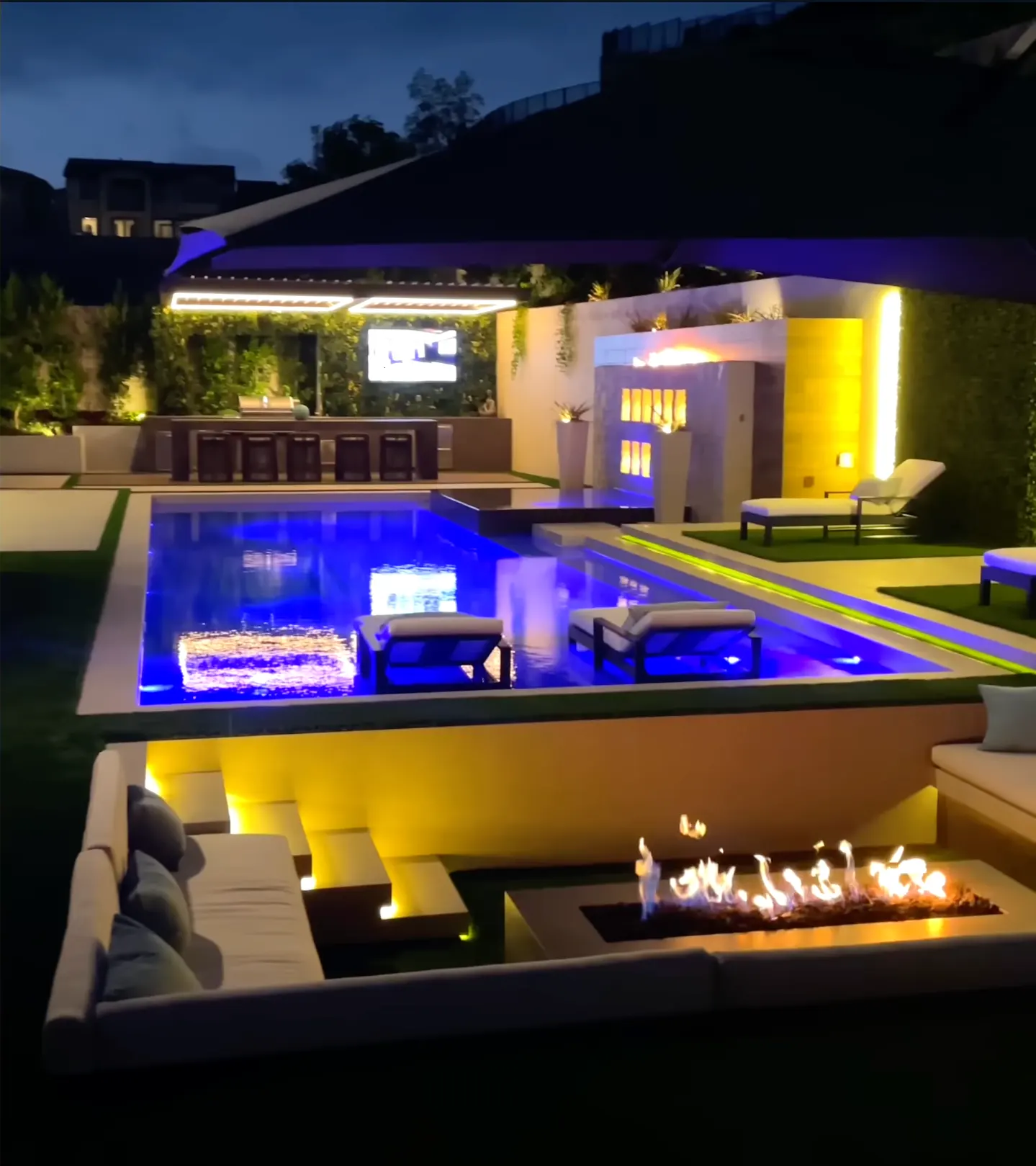
The sunken seating area becomes one of the most important gathering spaces in the yard.
Lowering it creates separation without taking up additional room. It also changes how the space feels when you’re in it. This is another example of how small backyard retaining wall ideas can focus on elevation instead of square footage.
For shade, a cantilever umbrella covers the entire seating area.
It’s a simple, cost-effective solution that avoids the need for another permanent structure while still making the space comfortable to use during the day.
How the Retaining Wall Became the Focal Point
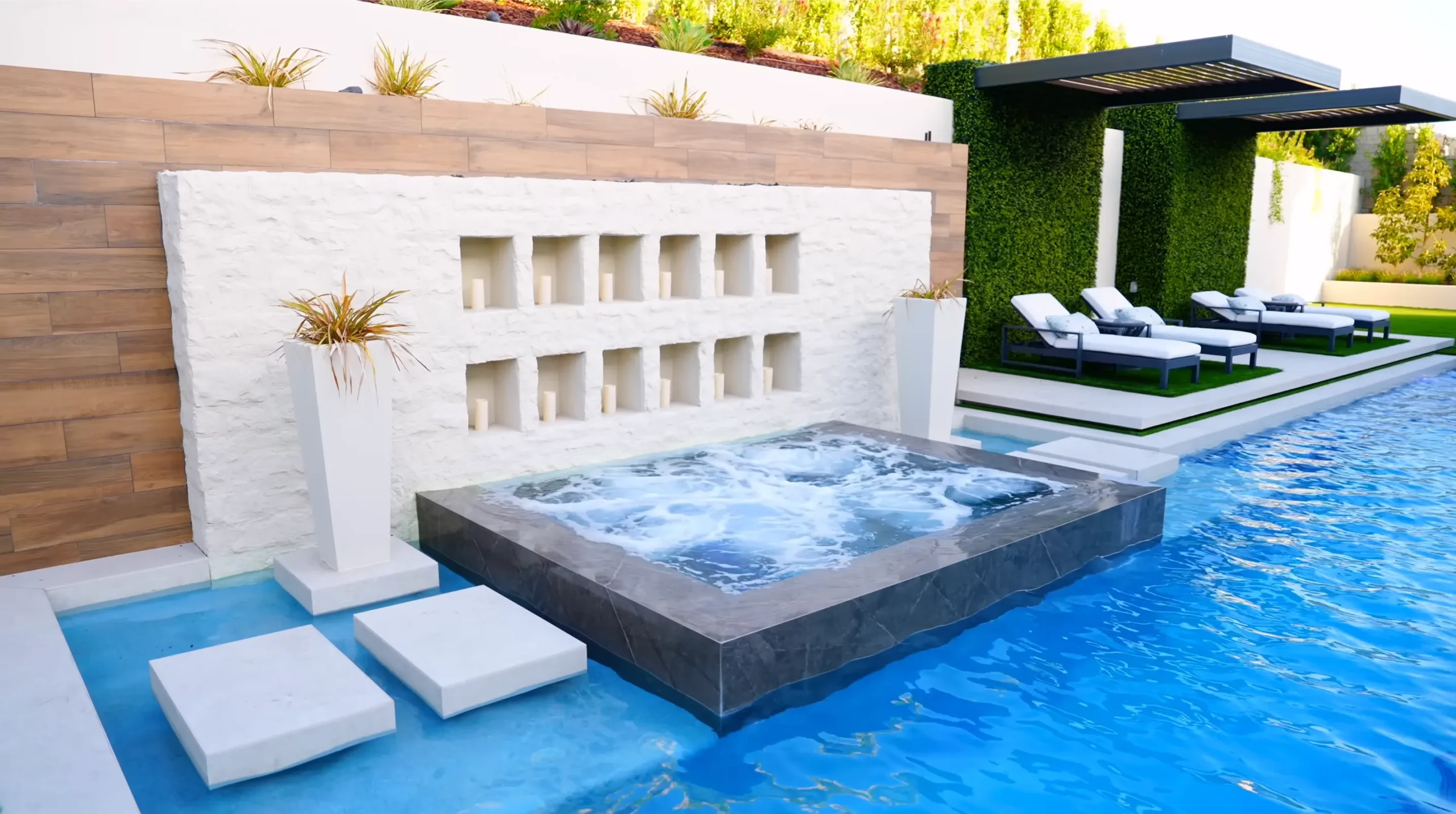
This wall is big. Just under 10 feet after the build.
It could have easily taken over the yard in the wrong way. Most retaining walls at this scale feel heavy and out of place, but here, it does the opposite.
The difference comes from the design. Instead of leaving it flat, the wall is layered with texture, depth, and function. There are pop-outs, material changes, planters, and lighting all working together.
Once that happens, it stops feeling like a barrier and starts shaping the entire space.
Here are some retaining wall ideas to take this feature from boring and utilitarian to an actual luxury, focal point in your yard:
1. Add Structure and Depth
A framed extension is built onto the existing wall, creating a layered look. Faux hedge panels are added to introduce texture and soften the scale.
2. Integrate Shade and Function
The wall supports a patio cover, which adds usability and makes the space feel more architectural.
3. Use Lighting to Change the Experience
Lighting is added throughout the wall and seating areas. At night, the entire space shifts. The wall is no longer just a backdrop. It becomes part of the atmosphere.
4. Layer Materials, Planters, and Fire
The wall includes:
– A planter at the top for added greenery
– Textural changes and pop-outs for depth
– Fire and lighting elements that reflect onto the water
Even small details like LED candles are used to bring movement and reflection into the space.
All of this works together to give the wall dimension, contrast, and purpose.
What This Backyard Shows
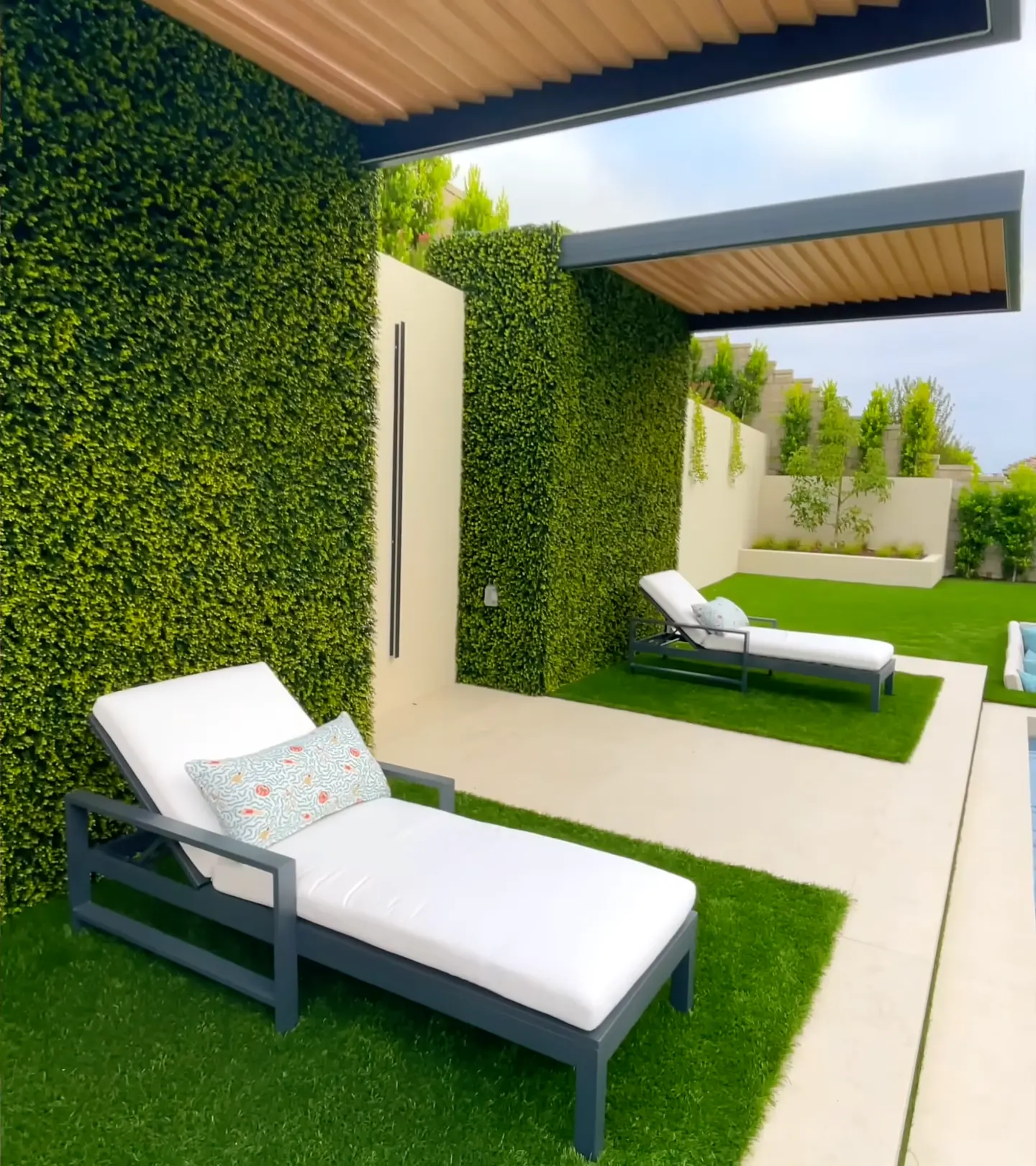
A space doesn’t need to be large to feel complete.
This yard has a limited footprint and a massive retaining wall, but it still feels dynamic and layered because every decision is intentional. This is what happens when you understand how to design a backyard with a retaining wall and use it to shape the experience instead of working around it.
The wall isn’t hidden. The slope isn’t ignored. They’re used to create structure, focal points, and variation across the entire yard.
If you have what you consider to be a difficult lot to work with, our team can help.
Click the button below to book a free design consultation call to get started.
👉 Start Your Design Today
📩 Subscribe for Weekly Design Ideas
💭 Download Our Free Inspiration Guide
Sloped Backyard Transformed Into Luxury Resort | Before & After
This retaining wall became the star feature of this backyard transformation.
What started as a steep, unusable slope turned into a functional and visually striking outdoor space.
Instead of just solving the grade issue, we designed a retaining wall that defines the entire backyard and elevates the look of the space.
There’s a limited footprint and a massive retaining wall, but we used both to shape a backyard that feels like a true resort. It’s dynamic, intentional, and just as considered as a space five times the size.
In this video, we’re sharing:
-How to design a small or difficult backyard so it feels intentional, not limited
-Ways to turn a retaining wall or slope into a focal point instead of something you try to hide
-How layering texture, elevation, and lighting makes the entire space feel deeper and more connected
-And more
Frequently Asked Questions
Can a retaining wall be a focal point in a backyard?
Yes. A retaining wall can become the main feature when it’s designed with intention. Adding texture, greenery, lighting, and built-in elements like planters or fire features gives the wall depth and makes it part of the overall experience instead of something that fades into the background.
What can you do with a sloped backyard to make it usable?
A sloped backyard can be transformed by creating defined levels. Sunken seating areas, tiered patios, and retaining walls help break the space into functional zones. When each level has a purpose, the yard feels more usable and connected.
How do you make a small backyard feel bigger?
A small backyard feels larger when the design uses vertical space, layered materials, and clear focal points. Elevation changes, lighting, and defined zones help create depth, which makes the space feel more open than it actually is.
What are the best ways to upgrade an existing retaining wall?
You can upgrade an existing retaining wall by adding new finishes, incorporating faux greenery or plant walls, installing lighting, and building planters or seating into the structure. These changes improve both the look and function without needing a full rebuild.
Is it better to hide or highlight a retaining wall?
Highlighting a retaining wall often creates a stronger design. When the wall is treated as a feature with texture, lighting, and architectural elements, it helps define the space and adds character to the yard.
How do you add lighting to a retaining wall?
Lighting can be added through integrated fixtures, uplighting, or decorative elements like fire features and LED accents. The goal is to create depth and highlight texture so the wall stands out, especially at night.
What makes a backyard feel like a resort?
A backyard feels like a resort when it combines comfort, layout, and atmosphere. Features like shaded seating, layered lighting, water elements, and defined gathering spaces all contribute to a space that feels intentional and immersive.
Behind The Blog

Justin Fox
Founder & Creative Director
Founder Justin Fox grew up with a passion for landscaping. After 15+ years building luxury yards and pools as a licensed contractor, he saw the limits of the design/build model. Homes get detailed, architect-led plans, so why shouldn’t yards? In 2019 he convinced brother Nate Fox to join him and launched Foxterra Design to focus on immersive, luxury outdoor spaces.
Foxterra designs immersive outdoor environments that blend architecture, landscape, and lifestyle into one cohesive vision. Our work is rooted in timeless materials, intentional layout, and outdoor living that feels effortless to use every day.
For this story, Justin focuses on how a retaining wall can shift from a limitation into the defining feature that shapes the entire backyard.

Nate Fox
Designer
Nate Fox helps shape Foxterra’s creative vision, blending architectural detail with a designer’s eye for proportion and flow. His work focuses on how outdoor spaces function as part of the home, not separate from it.
He approaches every project by looking at how people actually live—how they move through a space, where they naturally gather, and what makes them want to stay outside longer. That perspective turns layout into the most important part of the design.
His approach to outdoor design has recently been featured in publications like Architectural Digest and Martha Stewart Living, where he shares insights on creating outdoor spaces that feel as considered and functional as the interiors they connect to.