Key Takeaways:
A pool feels better when the details match how you actually use it.
— Start with lifestyle. A pool you dip into occasionally gets designed differently than one designed for a family with young kids. Consider your lifestyle when designing the pool.
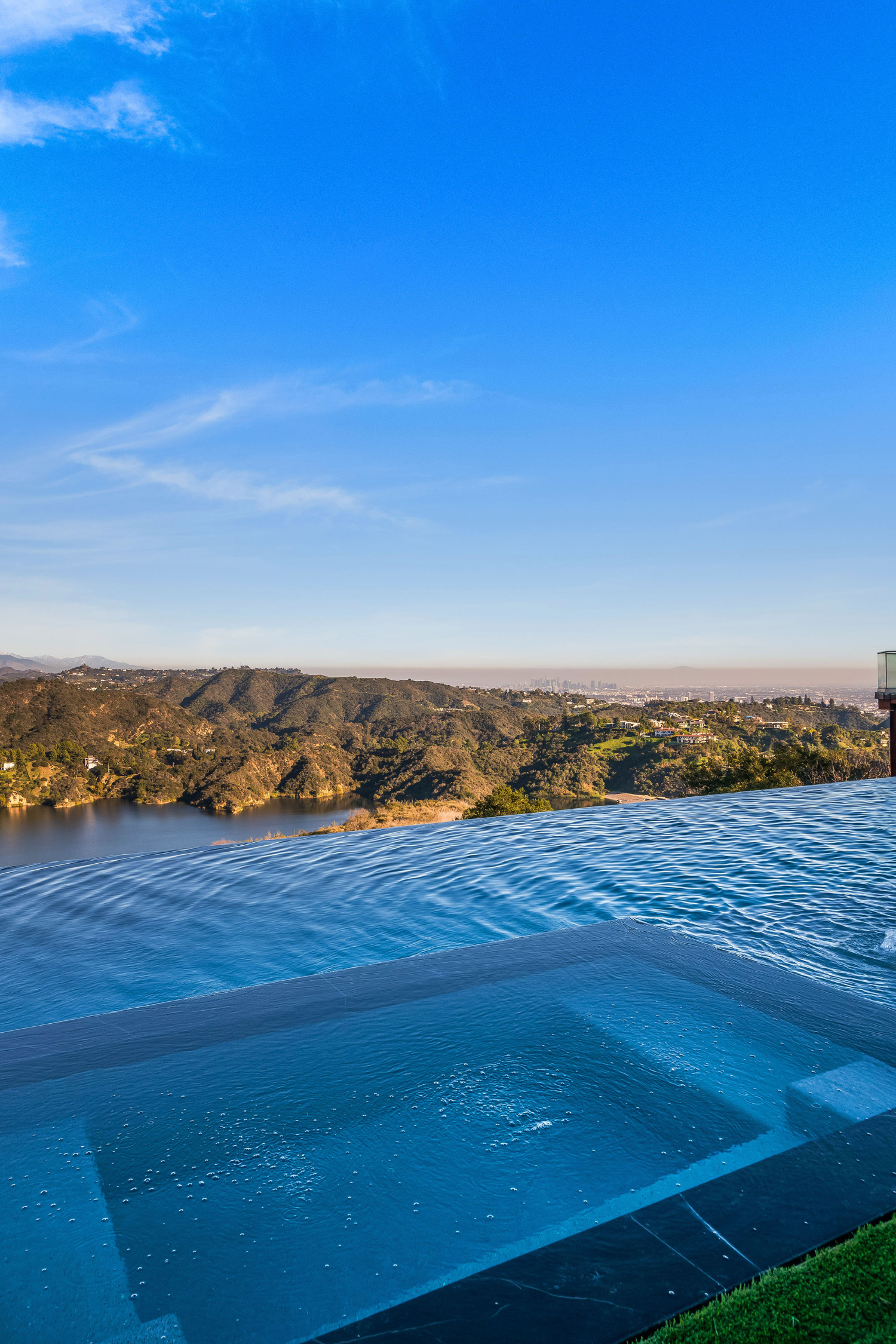
— Incorporate the edge into the design. A wider edge, ledges, and seating give you somewhere to sit and stay close to the water.
— Change levels. Sunken seating and steps down shift how you experience the pool and elevate the entire space.
— Add features that impact how the pool gets used. Baja shelves, water features, and built-ins give you more ways to be in and around the pool.
A “Pool” Looks Different to Everyone
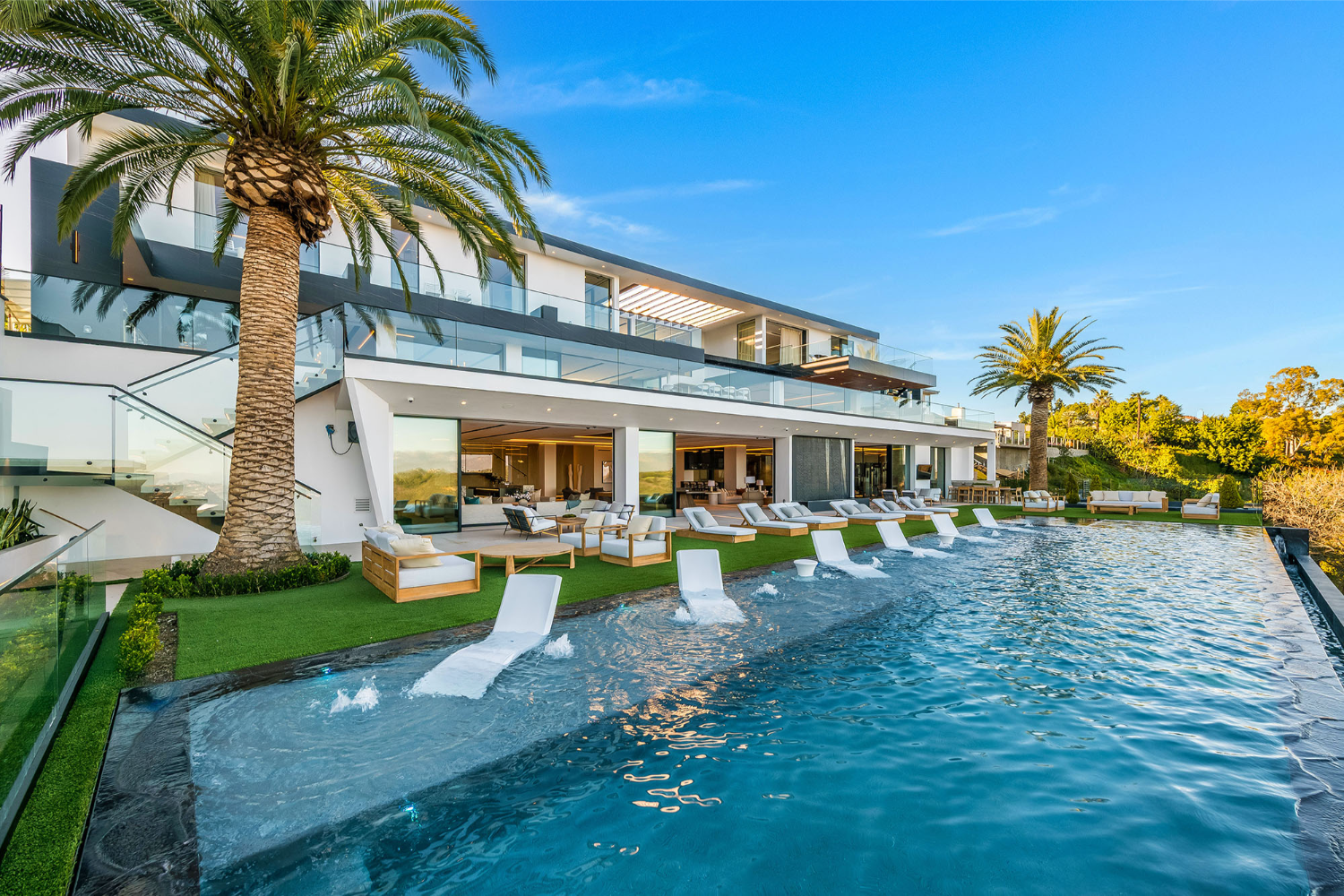
A “pool” doesn’t look or function just one way.
There are a lot of directions you can go in if you want to add a pool to your yard. Different sizes, shapes, materials, and more.
You can choose something simple or go for a more custom look. Plus, every homeowner’s lifestyle influences how they use their pool.
Some people want a pool just to add ambiance and movement to the space and envision using it for a quick dip and not much more.
Others want to spend all day in the water, with friends, family, and kids splashing around.
Design decisions shape how the space feels and how the pool actually gets used. Here are some of the details that can elevate any pool and give it a more custom, intentional feel.
Keeping the Pool Connected to the Outdoor Space
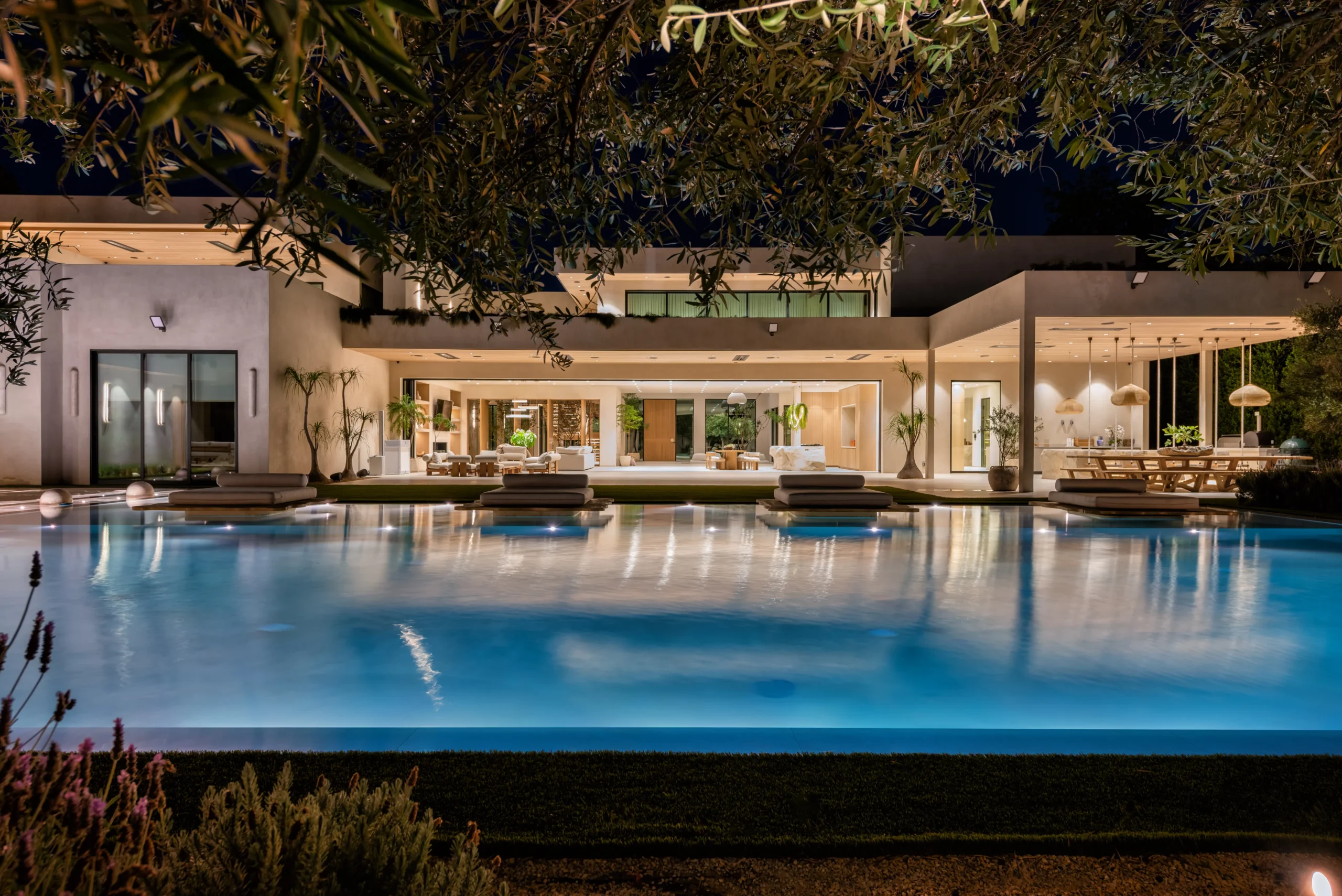
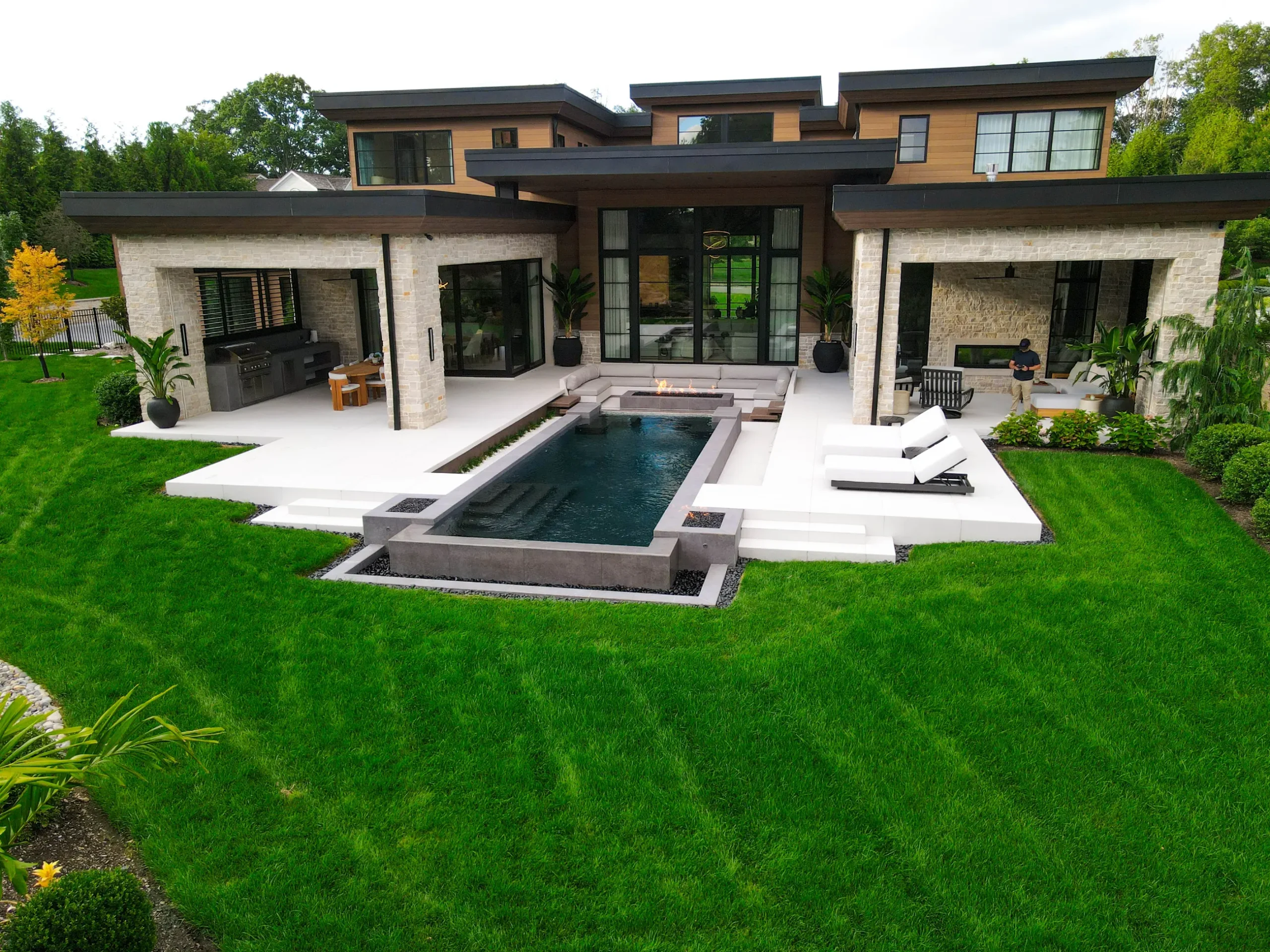
A mistake we see too often, is designing a pool that’s completely removed from the rest of the yard. It gets treated like its own space and off to the side, or on the far side of the property, separate from everything else.
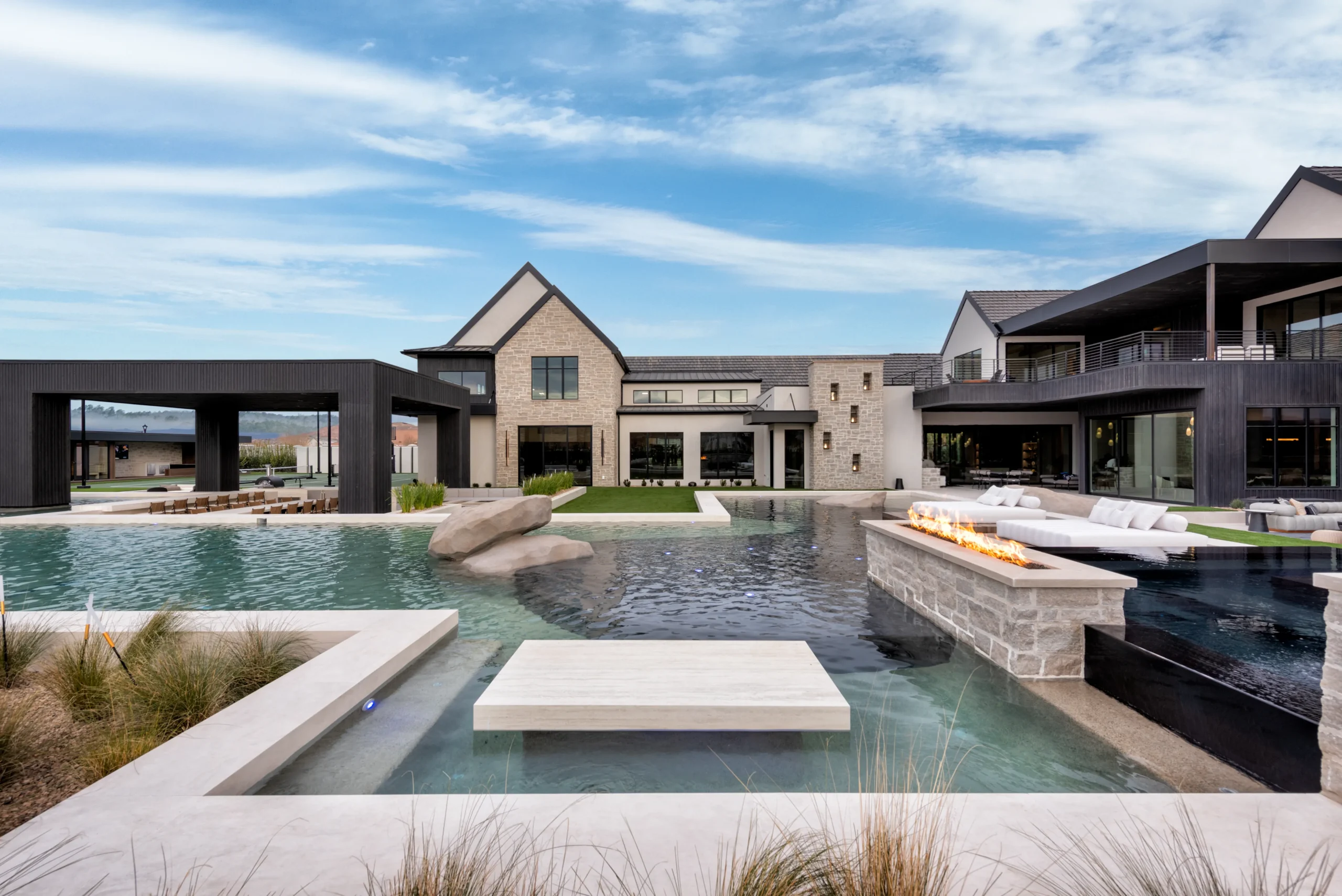
And this can work in some situations, but what we often recommend is making the pool the central focal point in the outdoor space. This allows you to use the pool as a way to connect all the other areas of the yard.
And, this allows the pool to get used and remain an important part of the yard, even when no one is swimming.
How Elevation Changes the Space
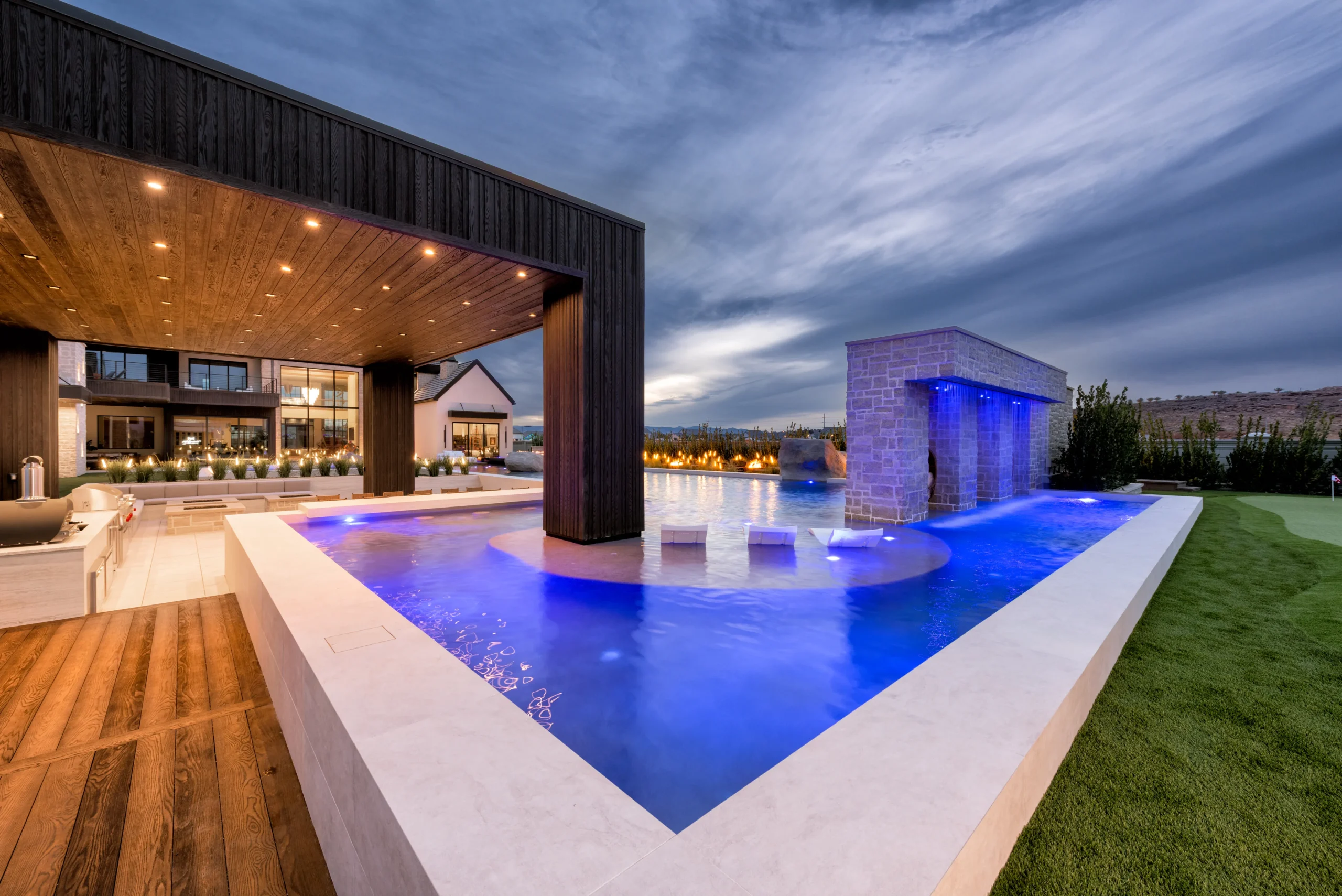
Many yards are designed as one, flat level where everything is at the same eyeline. But one of the most impactful ways to upgrade the space is by introducing level changes and adding depth to different areas, including the pool.
Here are some ways we approach that:
Extending the pool edge
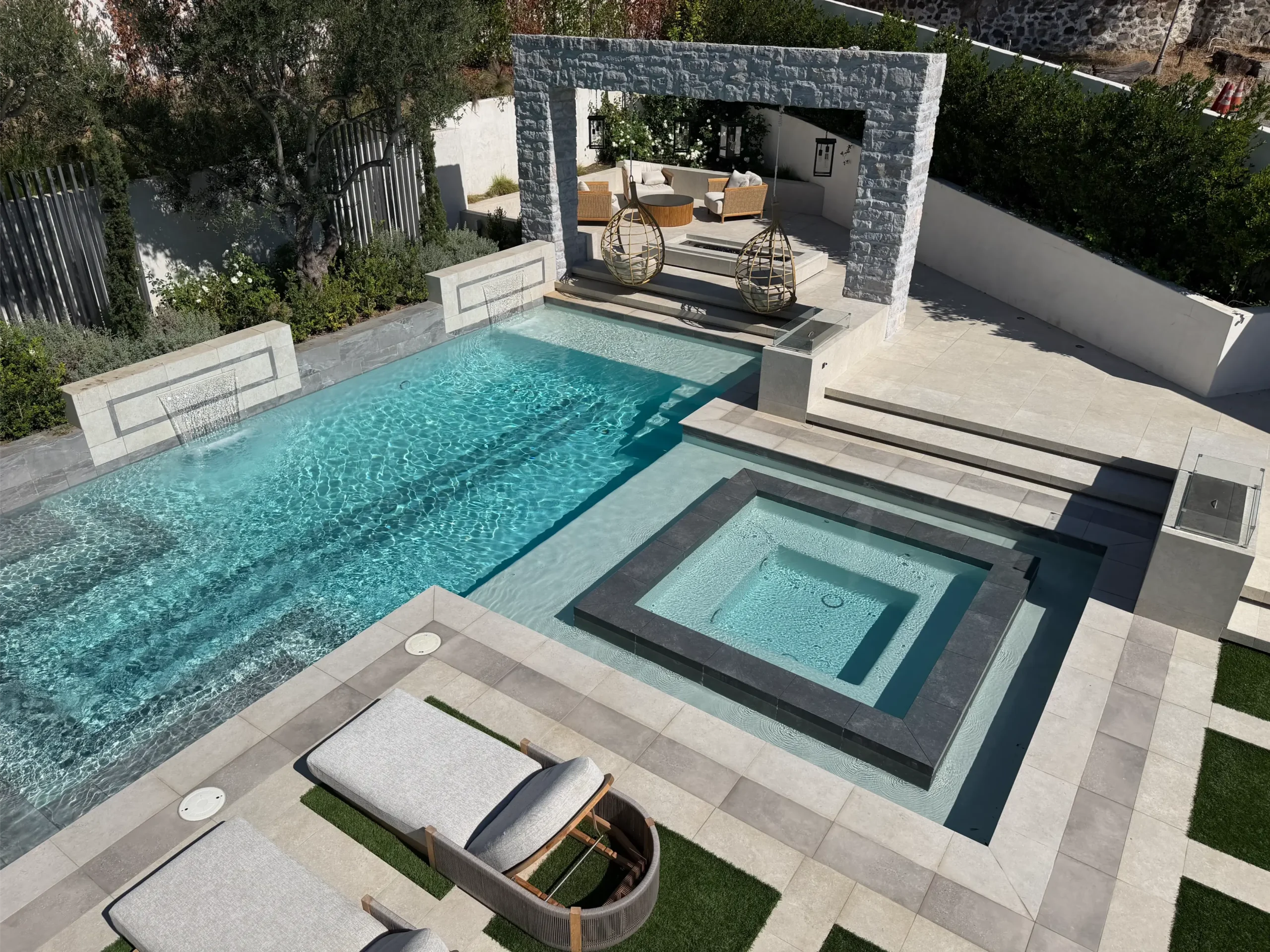
Instead of a thin coping detail, we often widen that edge so it becomes usable. Increasing the coping width, makes the pool edge a place where you can actually sit with your feet in the water, or set a drink. And it makes any pool feel more dynamic.
Sunken seating at water level
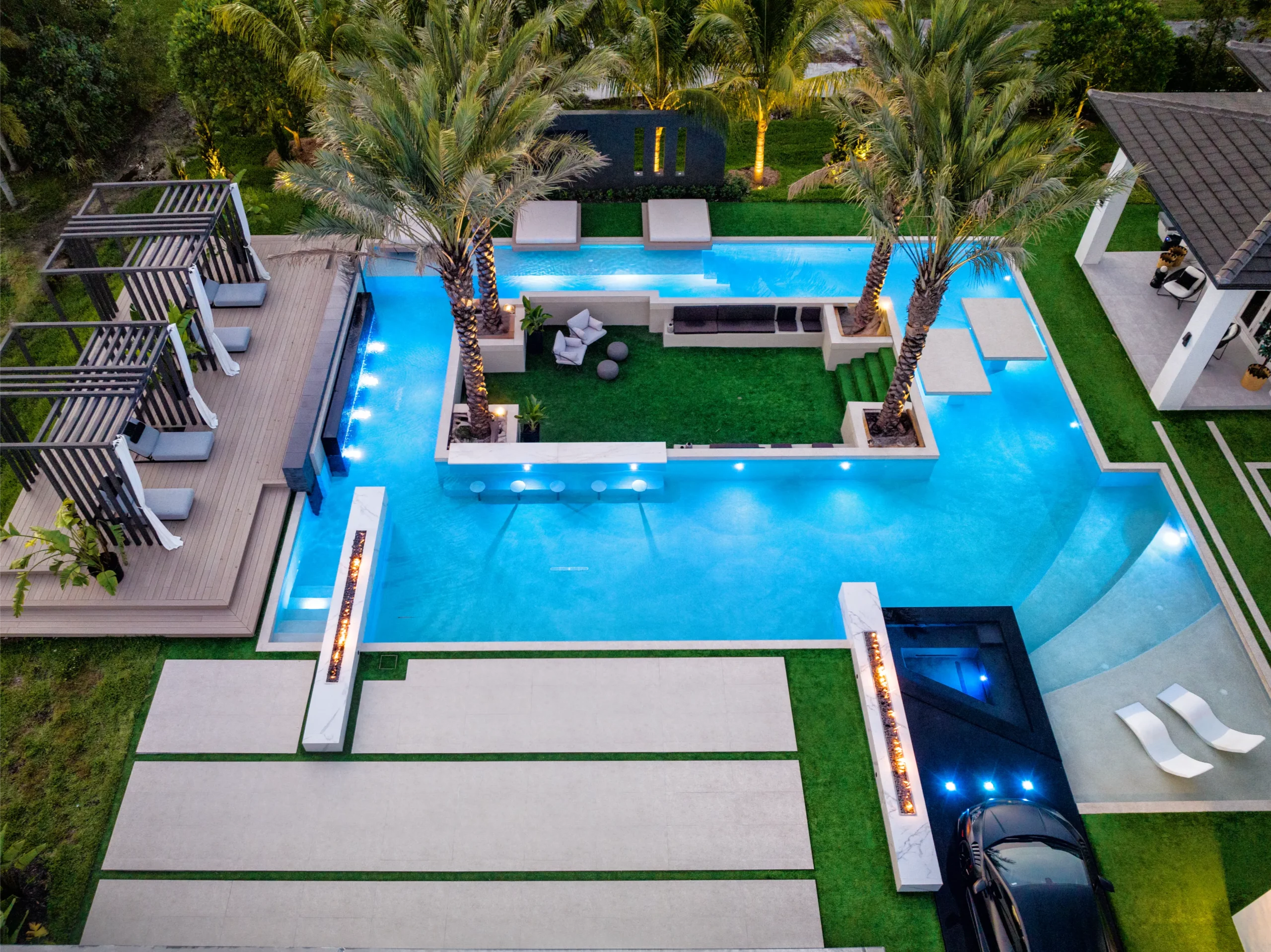
Adding a sunken seating area in front of the pool shifts your perspective completely. You’re sitting lower, right at eye level with the water, which gives you this immersive experience. Plus, this allows you to create a swim-up feature in the pool. Someone can sit in the sunken seating area and have a conversation with someone who is in the pool.
Raised patios with steps down to the pool
Designing a raised patio can also make the pool area more dynamic. When you introduce a level change, especially with steps going down to the water, the transition feels intentional. Instead of just being part of the yard, the pool feels more like a destination.
Planters built into the pool structure
Adding planters into the pool design creates depth without requiring major structures or a big budget. Layering them at different heights can give the illusion that there is a level change without requiring the construction to actually create one. And, you can change the entire feel of a pool area by adding soft scaping, greenery, and plants.
How Water Features Change the Pool

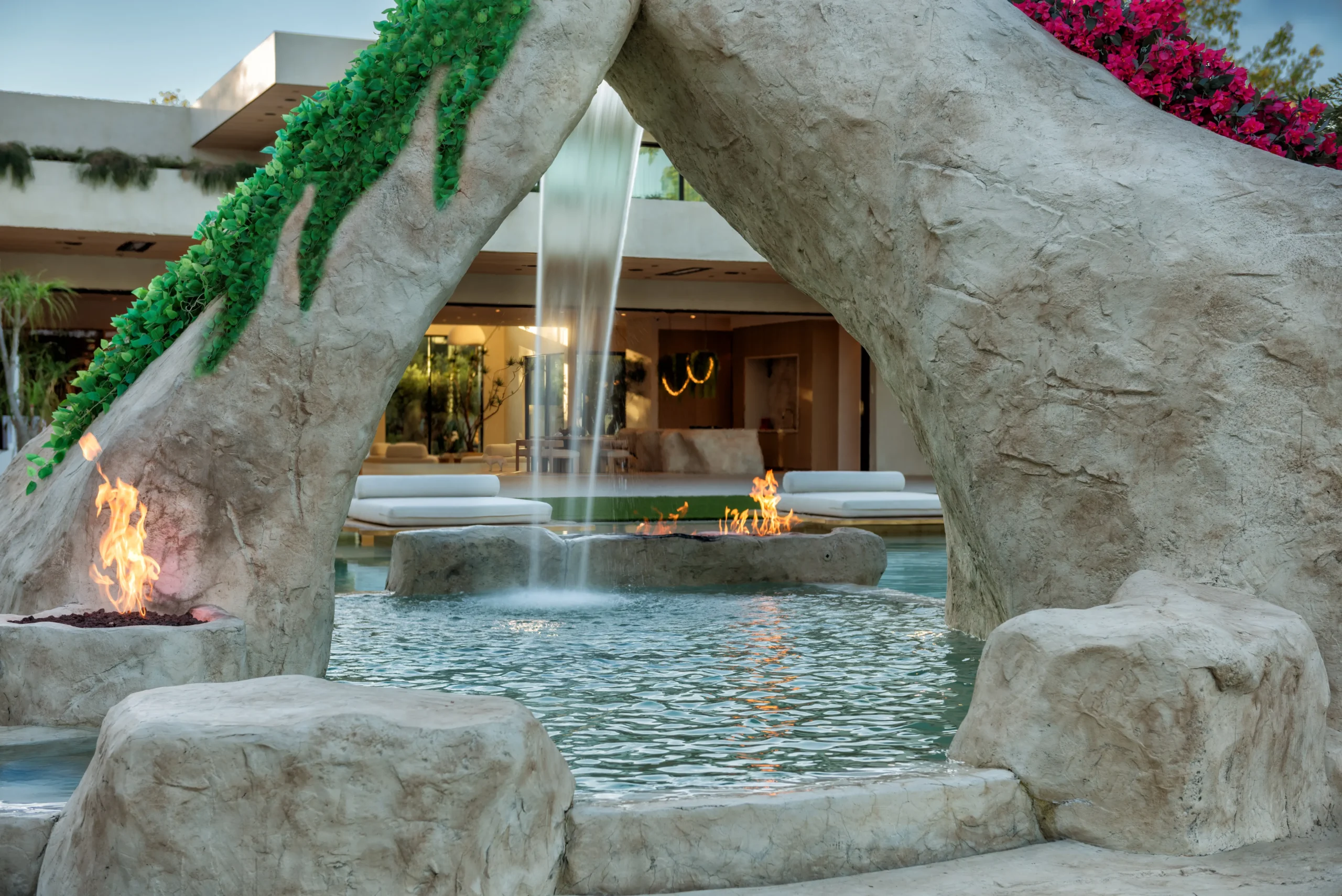
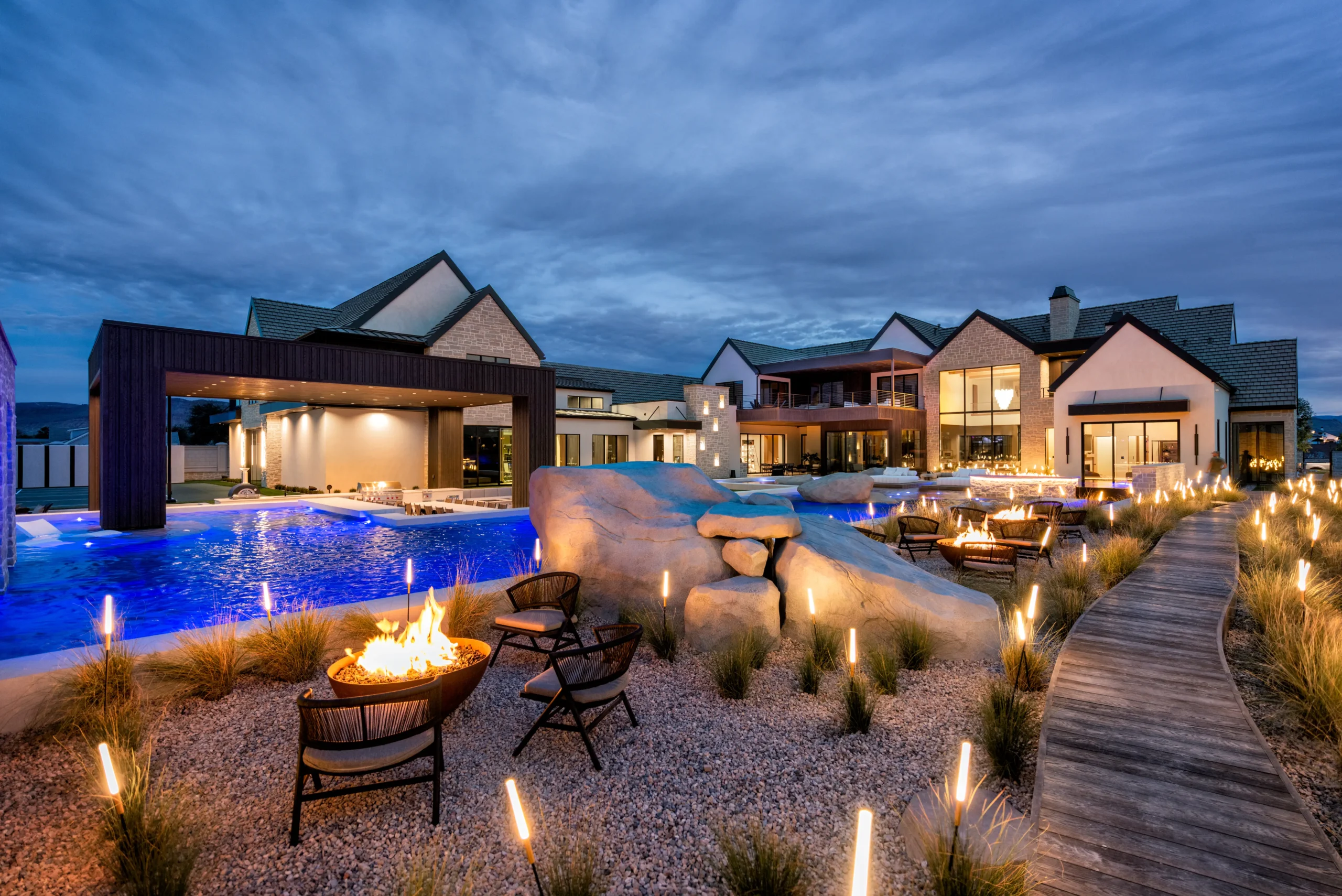
The goal for many homeowners is to create an outdoor space that feels like an escape—one that has a resort-style, really relaxing atmosphere. And introducing a water feature to your space is one the easiest ways to achieve that. Especially when it’s integrated into your pool area.
Here are some ways to add water features to your pool:
Laminars
Laminars create a clean arc of water that almost looks like glass during the day. It’s a subtle way to bring movement and sound into the space. And, when they’re lit at night, they can set they create a fun, vibrant tone for the whole yard.
Rain curtains
Rain curtains bring a vertical layer of water into the space. You hear them before anything else. They’re often used to define an area, especially around seating, where that layer of sound and movement makes the space feel more settled without separating it off completely.
Fountains
Adding a fountains near your pool infuses the space with an artistic focal point. It creates a strong visual presence that makes the entire pool feel even more high-end.
Features That Change How You Use the Pool
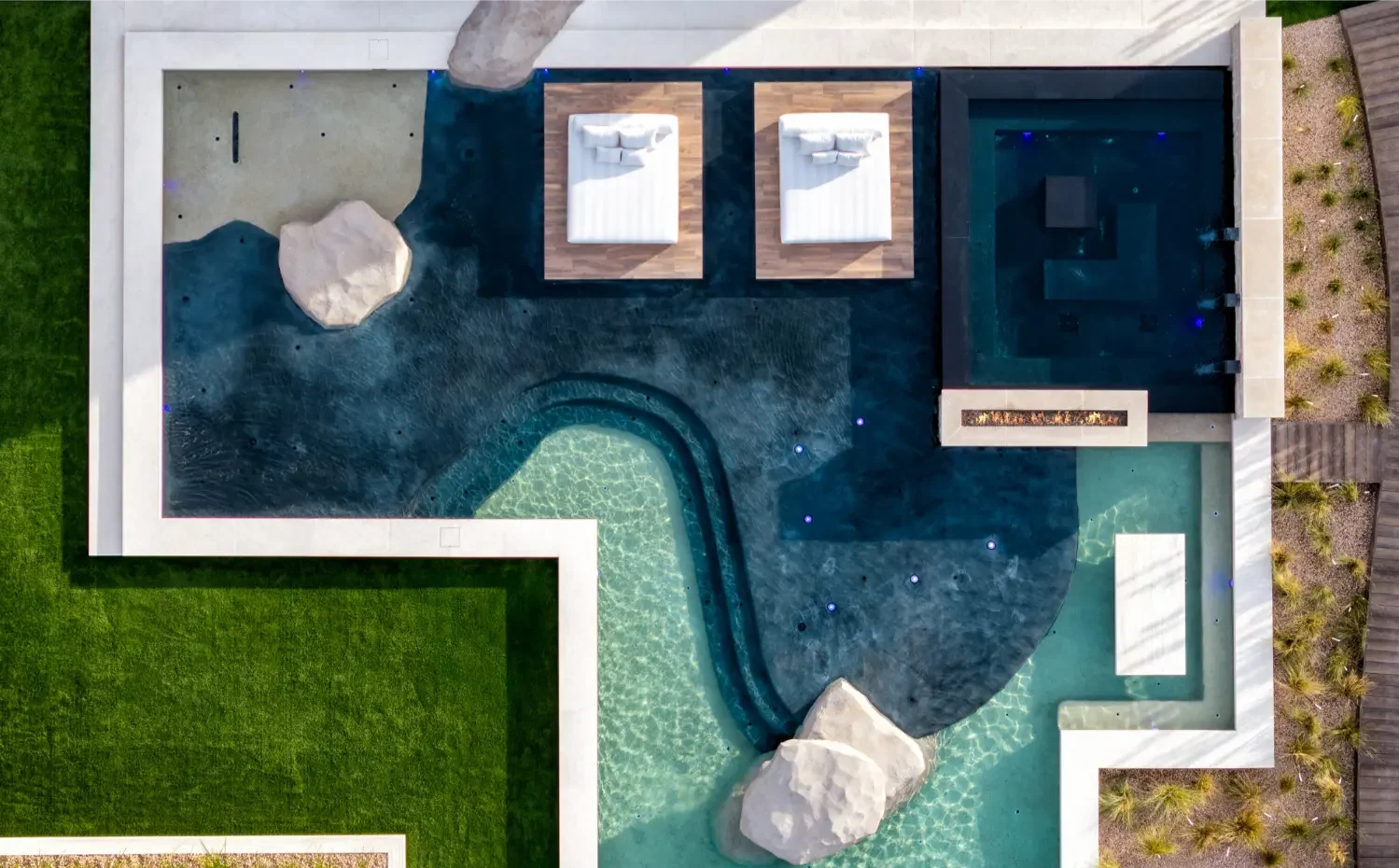
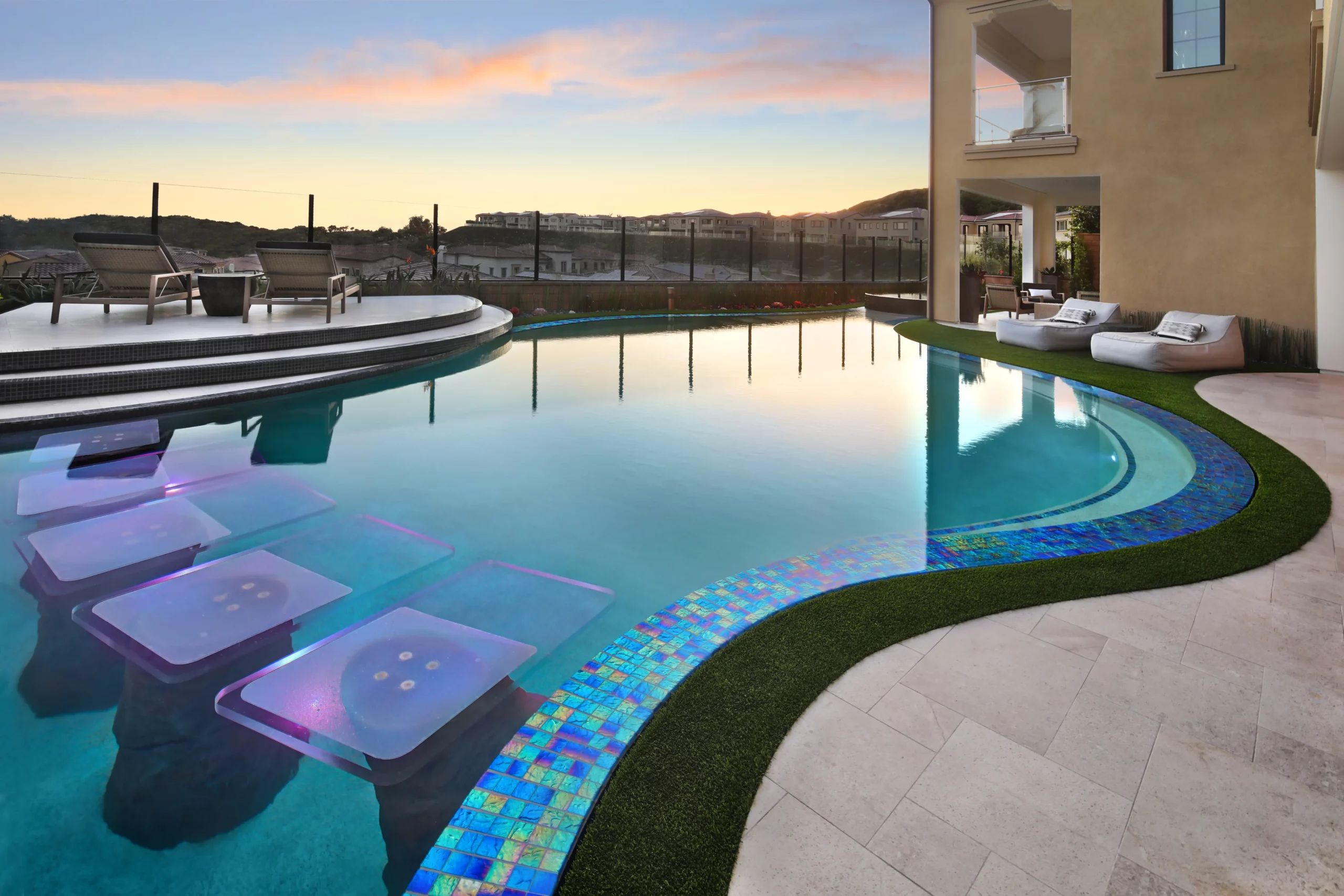
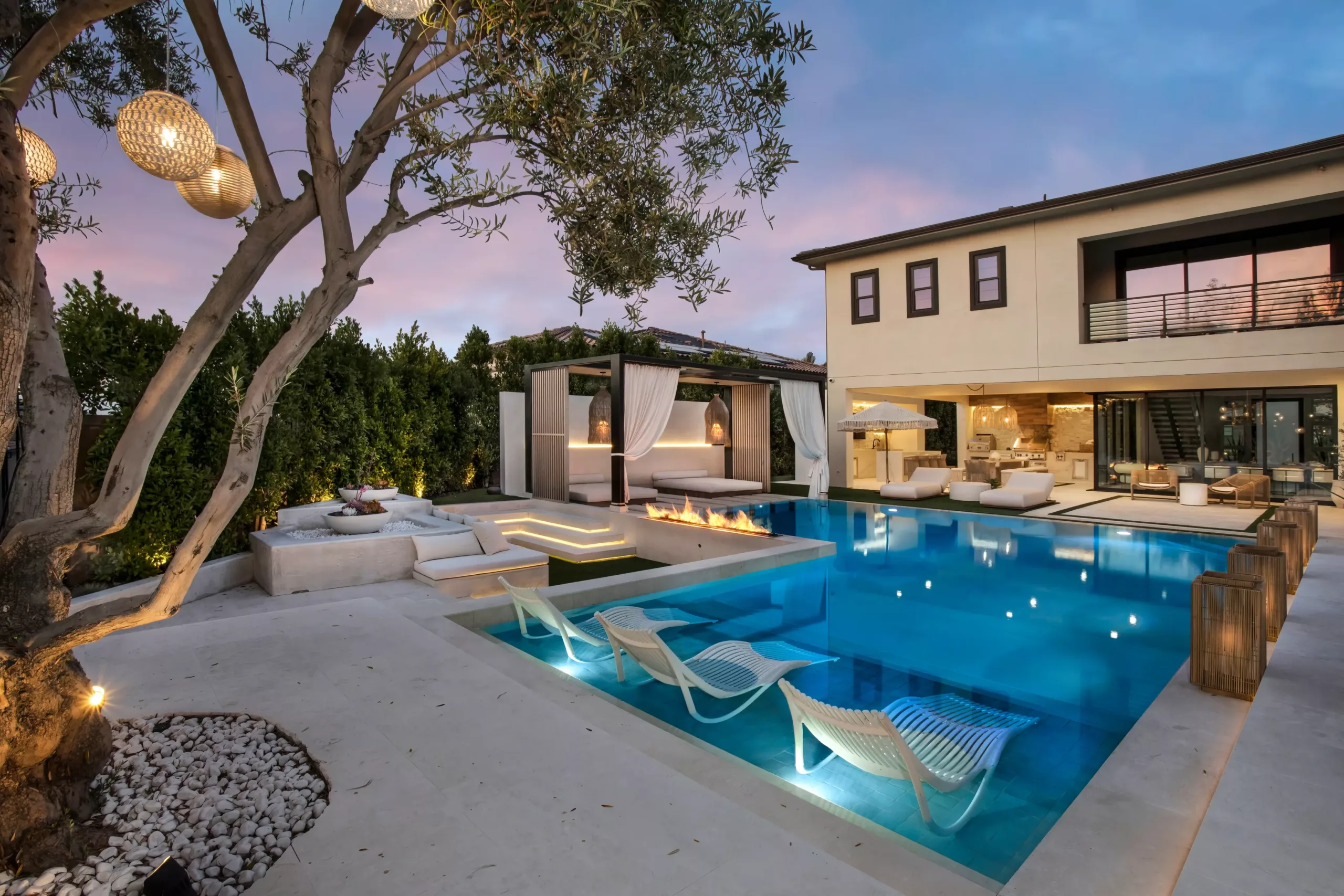
Some features don’t just change how the pool looks, they change how it gets used.
Baja shelves
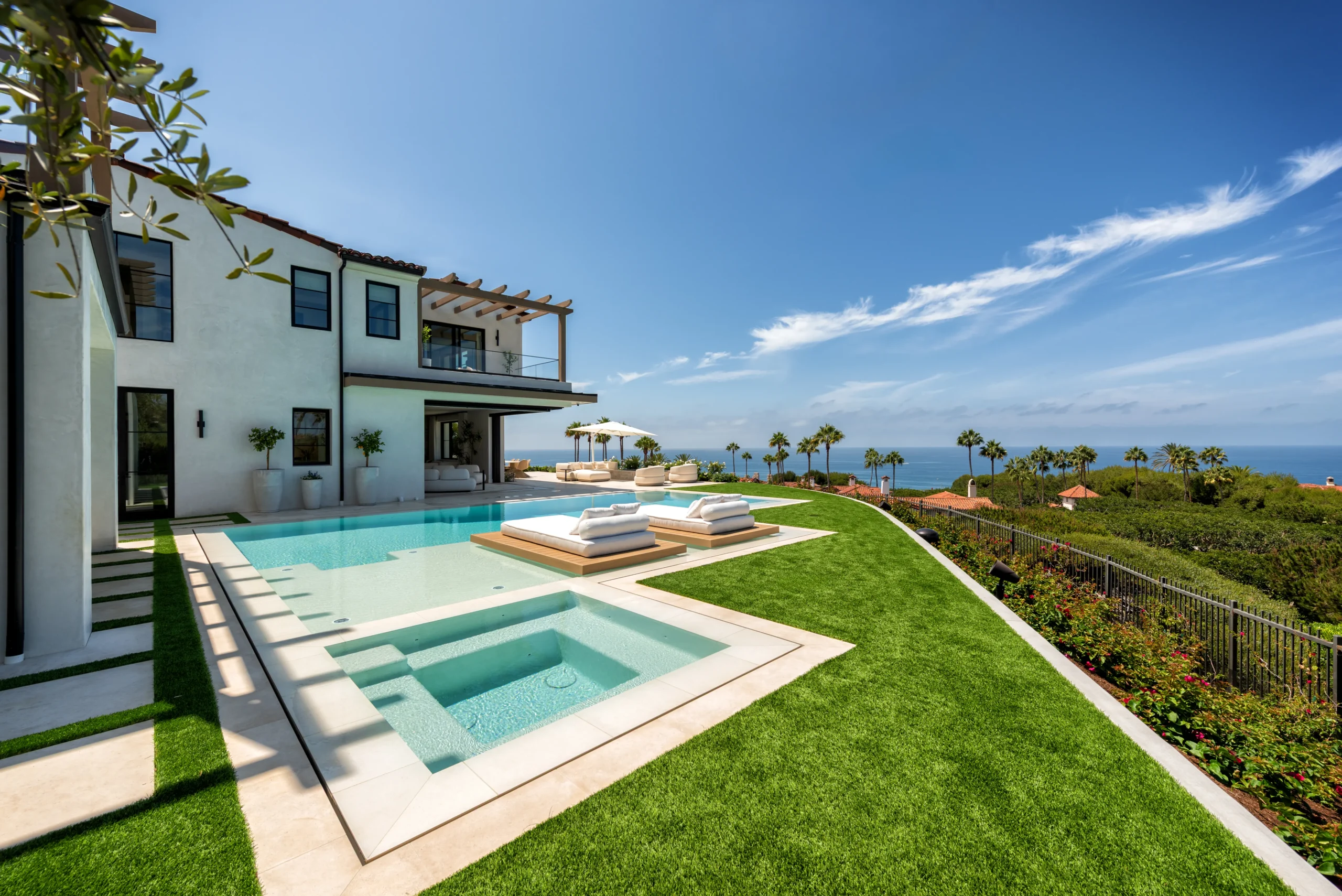
A baja shelf gives you a place to be in the water without swimming. It creates a shallow zone where people can sit, relax, or spend time without moving into the deeper part of the pool. This is also a great feature to add if you have young children and need a shallow area where they can splash around, while older kids can enjoy the rest of the pool.
Swim-up bars
A swim-up bar keeps the pool connected to the rest of the space. You’re able to sit in the water and still be part of what’s happening around it.
Built-in seating and ledges
Built-in seating adds places to stop within the pool itself. Instead of getting in and out, there’s somewhere to sit and stay in the water.
Jumping rocks, rope swings, waterslides
These add a more active layer to the pool. They change how the space is used and give it a different kind of function beyond just sitting or swimming.
Designing a Pool That Fits Your Space
At the end of the day, a pool doesn’t have to look or function one way.
Some are designed for quiet, slower use. Others are built to be more active and social. Most fall somewhere in between.
What matters is how it all comes together. How the pool connects to the space. How it’s shaped, how it moves, and how it gets used.
That’s what turns it from just a pool into something that actually works within the yard, and these are just some of the ways you can elevate a pool in your yard.
If you’re ready to move forward with a pool and outdoor space renovation, our team is here to help. Click the button below to book a free design consultation call today.
👉 Start Your Design Today
📩 Subscribe for Weekly Design Ideas
💭 Download Our Free Inspiration Guide
Design a Small Yard That Doesn’t Feel Small
You don’t need a bigger yard to create a resort-style outdoor space. You need a better design. In a smaller footprint, every decision carries more weight.
The layout matters more, the size of each feature matters more, and trying to fit too much in almost always works against you, making the space feel tighter than it actually is. In this video, we walk through how we approach small backyard design, including:
-Why “ruthless editing” is the most important first step
-How scale changes the way your yard feels
-When it makes sense to combine features instead of adding more
-Why certain structures aren’t always necessary in smaller spaces
-And how to create depth, even in a tight footprint
-A well-designed small yard can feel elevated and high-end, with the right design.
Frequently Asked Questions
What features make a pool look more high-end?
Features like wide coping, integrated planters, water features, and layered elevations all contribute to a more custom, luxury pool design.
What is the most popular pool feature right now?
Baja shelves (tanning ledges) and swim-up bars are among the most requested features because they expand how the pool is used.
How do you make a pool feel like a resort?
Incorporating water features, layered lighting, elevation changes, and connected seating areas helps create a resort-style outdoor space.
Should a pool be centered in a backyard?
In many cases, placing the pool as a central focal point improves both usability and flow, connecting different outdoor living areas.
What is a Baja shelf in a pool?
A Baja shelf is a shallow ledge in the pool designed for lounging, relaxing, or safe play for children.
Behind The Blog

Justin Fox
Founder & Creative Director
Founder Justin Fox grew up with a passion for landscaping. After 15+ years building luxury yards and pools as a licensed contractor, he saw the limits of the design/build model. Homes get detailed, architect-led plans, so why shouldn’t yards? In 2019 he convinced brother Nate Fox to join him and launched Foxterra Design to focus on immersive, luxury outdoor spaces.
Foxterra designs immersive outdoor environments that blend architecture, landscape, and lifestyle into one cohesive vision. Our work is rooted in timeless materials, intentional layout, and outdoor living that feels effortless to use every day.

Nate Fox
Designer
Nate Fox helps shape Foxterra’s creative vision, blending architectural detail with a designer’s eye for proportion and flow. His work redefines the backyard as an extension of modern luxury living.
In recent features, Nate’s perspective has been quoted across leading design publications, including Homes & Gardens and Luxury Pools + Outdoor Living, where he shares practical, design-forward guidance on everything from integrating sculptural moments and sightlines to creating “living wall” effects that soften hard architecture and make compact spaces feel more expansive.
For this story, Foxterra explores how small, intentional pool design decisions, like elevation changes, integrated features, and spatial connection, can transform a standard pool into a fully realized outdoor experience.