Key Takeaways:
A small yard can work exceptionally well when every feature earns its place and the design is tailored to how the space will actually be used.
— Edit your wish list first. Trying to fit every desired feature into a compact yard often leads to a crowded design and a higher budget.
— Pay attention to scale. Smaller furniture, plants, and features often feel more natural in a limited footprint while still delivering the same experience.
— Combine functions where possible. Features like a spool can provide the benefits of both a pool and spa without consuming excessive space.
— Use distance to your advantage. Placing focal points at the farthest visible point in the yard can create a stronger sense of depth and spaciousness.
How Do You Design a Small Backyard Without Making It Feel Crowded?
A small backyard doesn’t have to feel limiting. In many cases, a compact yard simply requires more intentional design decisions. The right priorities, proper scale, and strategic focal points can make a small space feel comfortable, functional, and visually larger than its actual footprint.
Small Yard Checklist
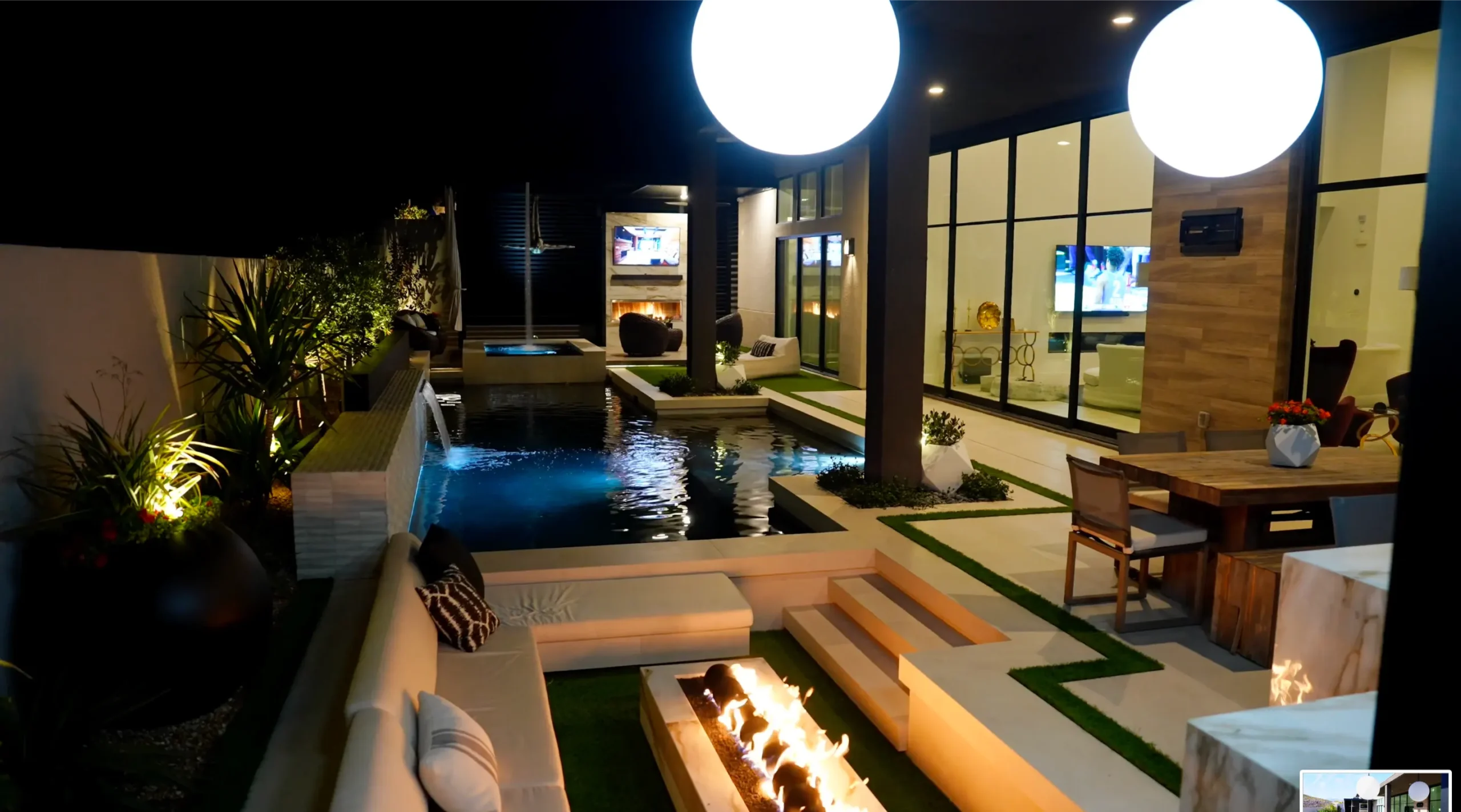
Something we hear a lot is, “Our yard is small. We don’t see the potential. We don’t know what we want to do with the space or what we can even do.”
But actual square footage isn’t always the issue. It usually comes down to the design.
In a limited footprint, every decision carries more weight. The wrong layout, oversized features, or too many level changes can make a yard feel even smaller than it already is.
When a small yard is designed correctly, it doesn’t feel overcrowded. It feels intentional, usable, and elevated.
Here’s how we think about small-space design for our clients.
Ready to transform your outdoor space? Click the button below to book a free design consultation with our team today.
Revisit Your Wish List
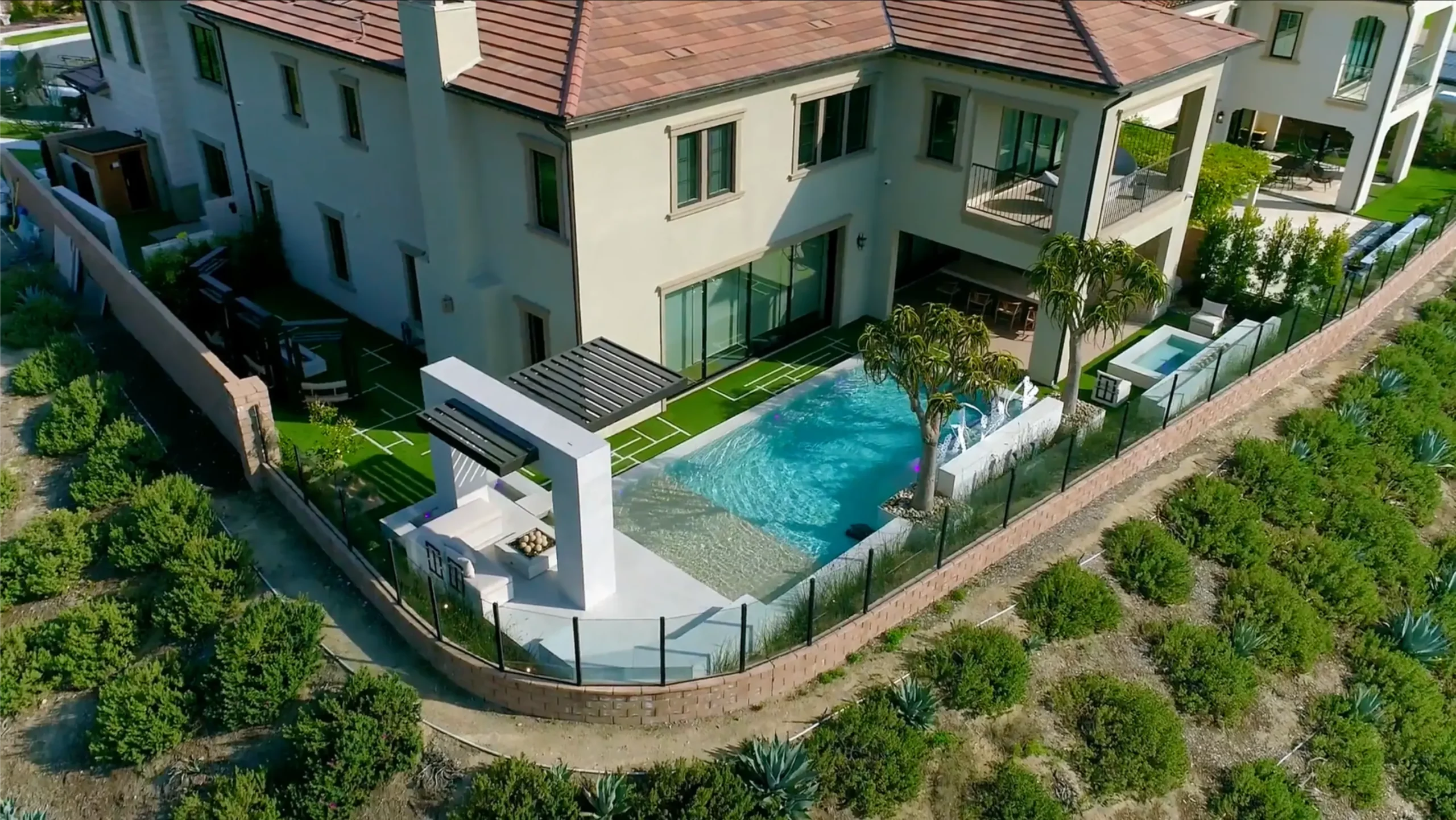
My first piece of advice for clients with limited space is simple: start by envisioning how you actually want to use your outdoor space.
The most common mistake we see is treating every item on a wish list as equally important. Not only does that increase the budget, but it often pulls attention away from the features that would have the biggest impact on the space.
A small yard typically can’t support every idea at the same time.
That may sound limiting, but I always encourage clients to look at it differently. A smaller footprint forces you to think more intentionally about what belongs in the yard. When the design is built around your lifestyle, the result is often more functional and more enjoyable than a larger space packed with features.
It might be nice to have an oversized spa, a pool, a sunken seating area, and a covered patio. But which of those will actually change the way you spend time outside?
In many small spaces, covered patios don’t end up being a priority. Especially in tract-home communities, surrounding homes often provide shade throughout the day. If your home already includes a California room or covered outdoor area, adding another structure doesn’t always improve the experience.
Stand-alone structures are expensive. Sometimes a thoughtfully placed tree provides exactly what the space needs.
The goal isn’t to fit more into the yard. The goal is to make room for the features that matter most.
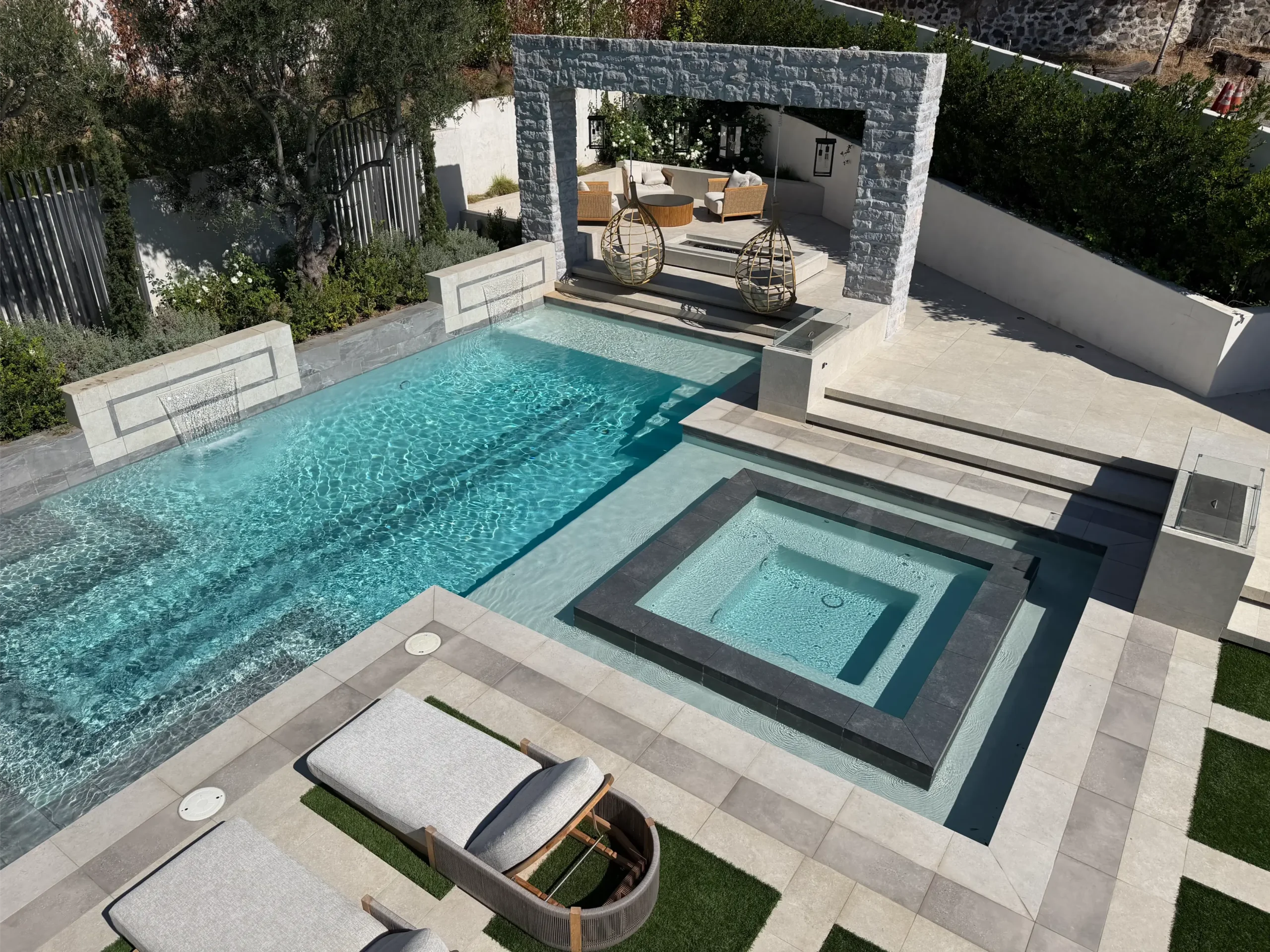
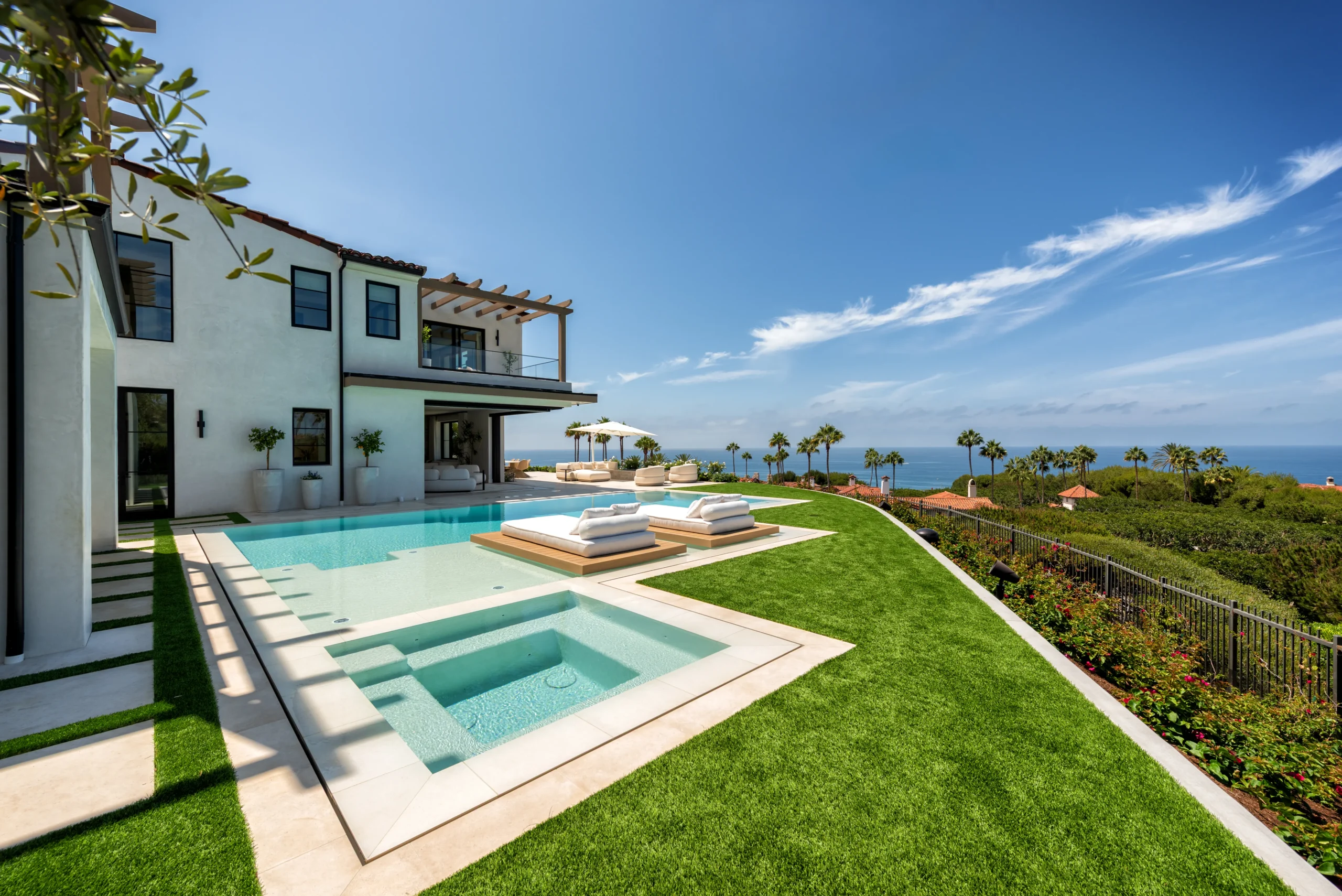
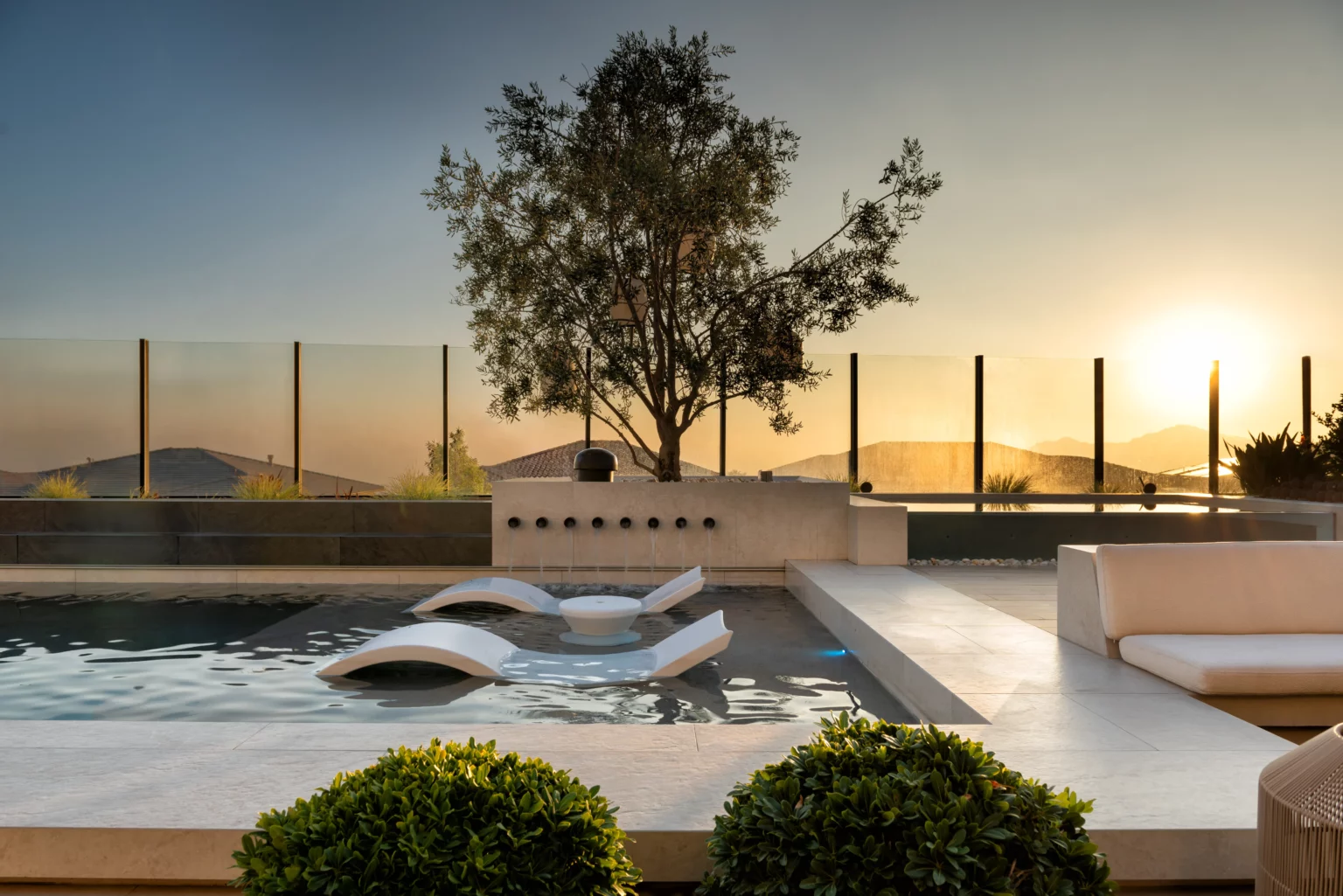
And, if space is especially tight, consider combining functions. One option is a spa/pool, which combines a spa and a pool into a single feature.
When designed well, it can also become a beautiful focal point that feels more like a custom water feature than a compromise.
Once again, it comes back to understanding how you want to use the space and letting that guide the priorities.
Think Carefully About Scale
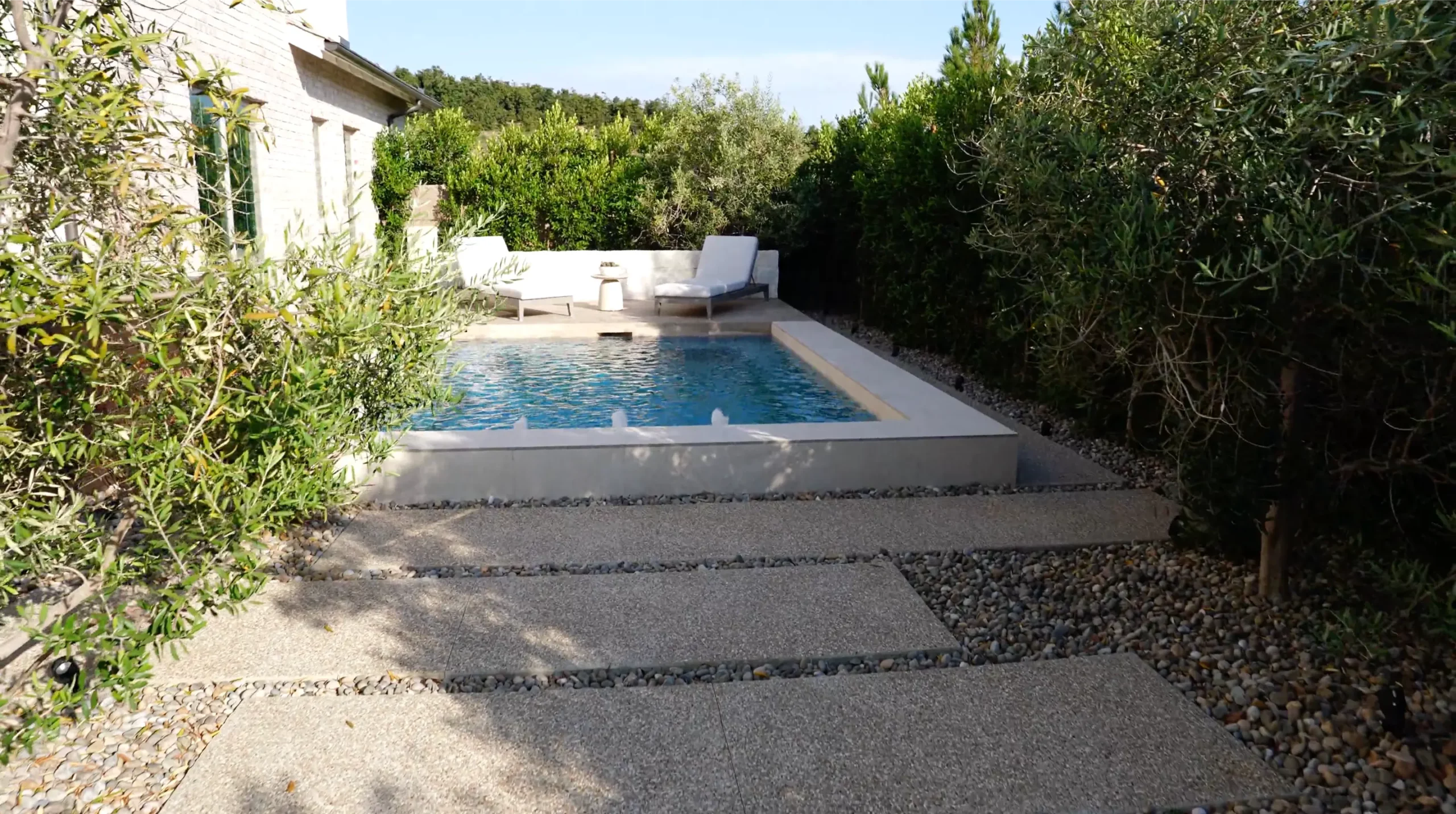
Scale is one of those design principles that, when it’s done correctly, you don’t notice.
We’re based in Orange County, California, and one of the best examples comes from Disneyland. It’s a well-known design trick that the second stories along Main Street are built at a smaller scale than they would be in the real world.
Most people never notice it. They simply experience the street as welcoming, comfortable, and visually connected to the castle at the end.
The same concept can apply in a backyard.
There are times when adjusting scale is the best design decision for a small space.
For example, if you love the idea of a daybed near water, a full-size daybed may overwhelm the yard. A smaller version may fit perfectly while still creating the same experience. Once it’s integrated into the overall design, most people won’t even notice that it’s smaller than standard.
The same thinking applies to plants.
A good example is Little Ollie, a shrub that gives you the appearance of an olive tree in a much smaller form. If you love olive trees but don’t have room for one, Little Ollie can provide a similar aesthetic without eventually outgrowing the space.
In the right setting, these scaled-down elements are often the perfect solution.
Place the Focal Point as Far Away as Possible
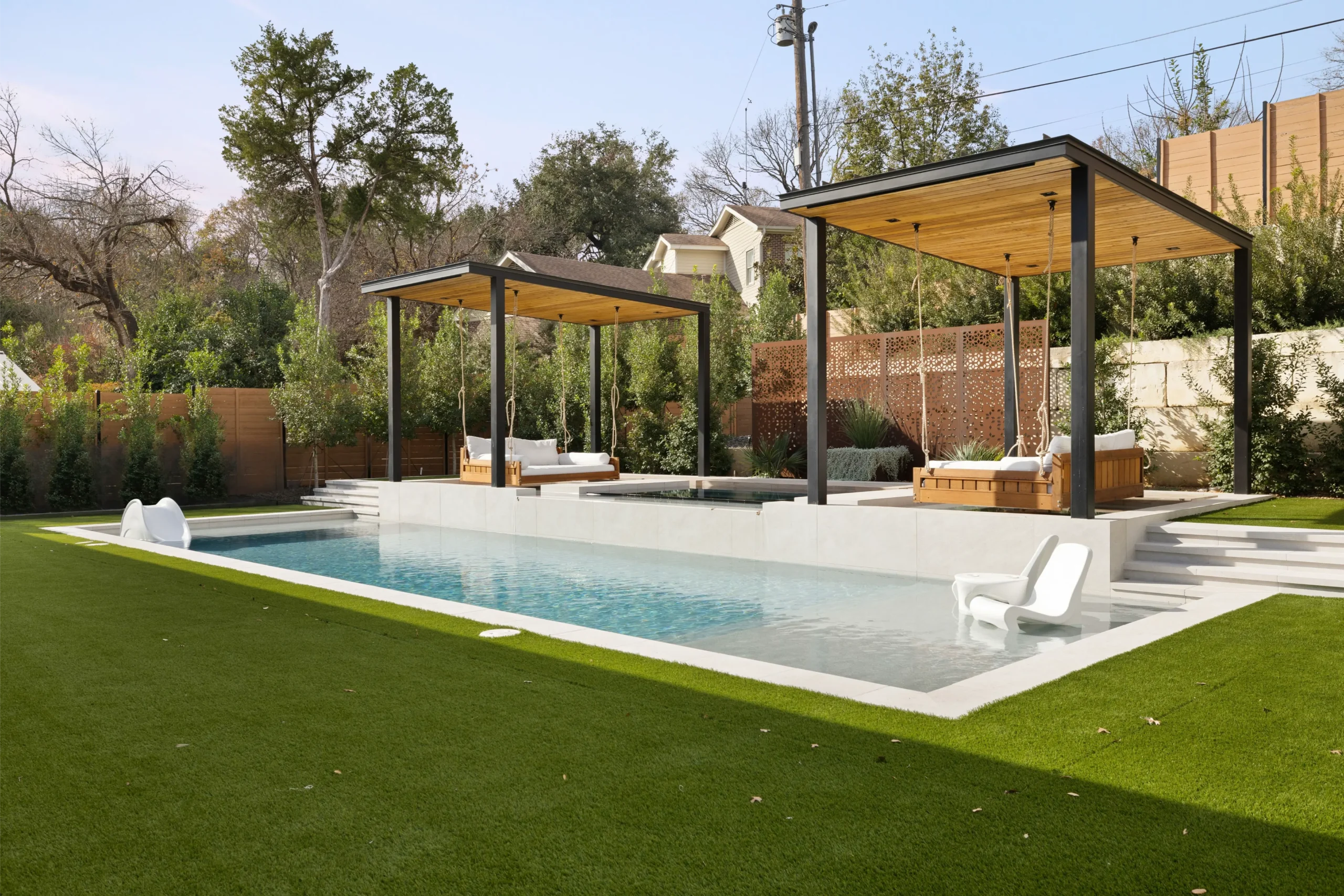
The final principle is choosing a focal point that sits at the farthest possible point from where you’re standing.
Imagine a shoebox-shaped yard. You may only have 15 feet between the back of the house and the rear property line, but the yard is relatively wide.
In that situation, placing the focal point directly on the back wall may not be the best option.
Depending on the location of the back doors, it may make more sense to place the focal point in one of the rear corners. As someone steps outside, their eye naturally moves toward the farthest visible point in the yard.
This creates a stronger sense of depth and makes the space feel larger than it actually is.
Even if part of that effect is visual illusion, it changes how people experience the yard.
Transforming Your Yard

A small yard doesn’t limit what’s possible.
Some of the most impressive transformations we’ve worked on have happened in compact spaces. The key is making thoughtful decisions about priorities, scale, and layout.
When every square foot matters, good design matters even more.
Working with a designer who understands how to maximize a small footprint can help you avoid costly mistakes and make the most of the space you have.
If you’re ready to transform your outdoor space, schedule a free design consultation with Foxterra. We’ll help you create an outdoor environment that feels intentional from the front entrance to the backyard.
Book a free design consultation with Foxterra, and let’s bring your outdoor space to life.
👉 Start Your Design Today
📩 Subscribe for Weekly Design Ideas
💭 Download Our Free Inspiration Guide
Inside a Modern Mediterranean Backyard Resort
We turned an unusable lot into a luxury Mediterranean resort-style backyard designed for entertaining, relaxation, and family living. This difficult backyard transformation became a private Mediterranean oasis filled with immersive water features, open gathering spaces, and timeless outdoor design. Inside this yard tour, we’re showing you:
– How water carries you through the property, from the front entrance, to the pool
– Why the openness of the layout makes the entire yard feel more elevated and luxurious
– Hidden spaces throughout the property that completely change the experience of the yard
– Design decisions that make this the perfect family-friendly yard for entertaining
– The details that make this modern Mediterranean backyard feel warm, immersive, and timeless
Frequently Asked Questions
Can a small backyard still have luxury features?
Yes. The key is selecting the right features rather than the most features. A thoughtfully designed small yard can include elements like a spool, custom seating, water features, outdoor kitchens, or fire features without feeling overcrowded.
What is the biggest mistake people make when designing a small backyard?
The most common mistake is trying to include too many features. When every item on a wish list is forced into a limited footprint, the yard often feels cramped and loses functionality.
Should I add a covered patio to a small backyard?
Not always. Many small yards already receive natural shade from nearby structures, existing covered areas, or landscaping. In some situations, a covered patio can consume valuable space that may be better used elsewhere.
What is a spool?
A spool is a combination spa and pool. It offers many of the benefits of both while requiring significantly less space than a traditional swimming pool.
How can I make my backyard feel bigger?
Proper scale, simplified layouts, fewer level changes, and placing focal points at the farthest visible point in the yard can all help create a stronger sense of depth and openness.
Do small backyards require a different design approach?
Yes. Every decision carries more weight in a small yard. Feature selection, circulation, furniture sizing, plant choices, and focal point placement all have a greater impact on how the space feels and functions.
Behind The Blog

Justin Fox
Founder & Creative Director
Founder Justin Fox grew up with a passion for landscaping. After 15+ years building luxury yards and pools as a licensed contractor, he saw the limits of the design/build model. Homes get detailed, architect-led plans, so why shouldn’t yards? In 2019 he convinced brother Nate Fox to join him and launched Foxterra Design to focus on immersive, luxury outdoor spaces.
Foxterra designs immersive outdoor environments that blend architecture, landscape, and lifestyle into one cohesive vision. Our work is rooted in timeless materials, intentional layout, and outdoor living that feels effortless to use every day.

Nate Fox
Designer
Nate Fox helps shape Foxterra’s creative vision, blending architectural detail with a designer’s eye for proportion and flow. His work redefines the backyard as an extension of modern luxury living.
In recent features, Nate’s perspective has been quoted across leading design publications, including Homes & Gardens and Luxury Pools + Outdoor Living, where he shares practical, design-forward guidance on everything from integrating sculptural moments and sightlines to creating “living wall” effects that soften hard architecture and make compact spaces feel more expansive.
For this story, Nate explores how disciplined editing, scaled design elements, and carefully placed focal points can maximize the potential of a small backyard without sacrificing comfort or luxury.