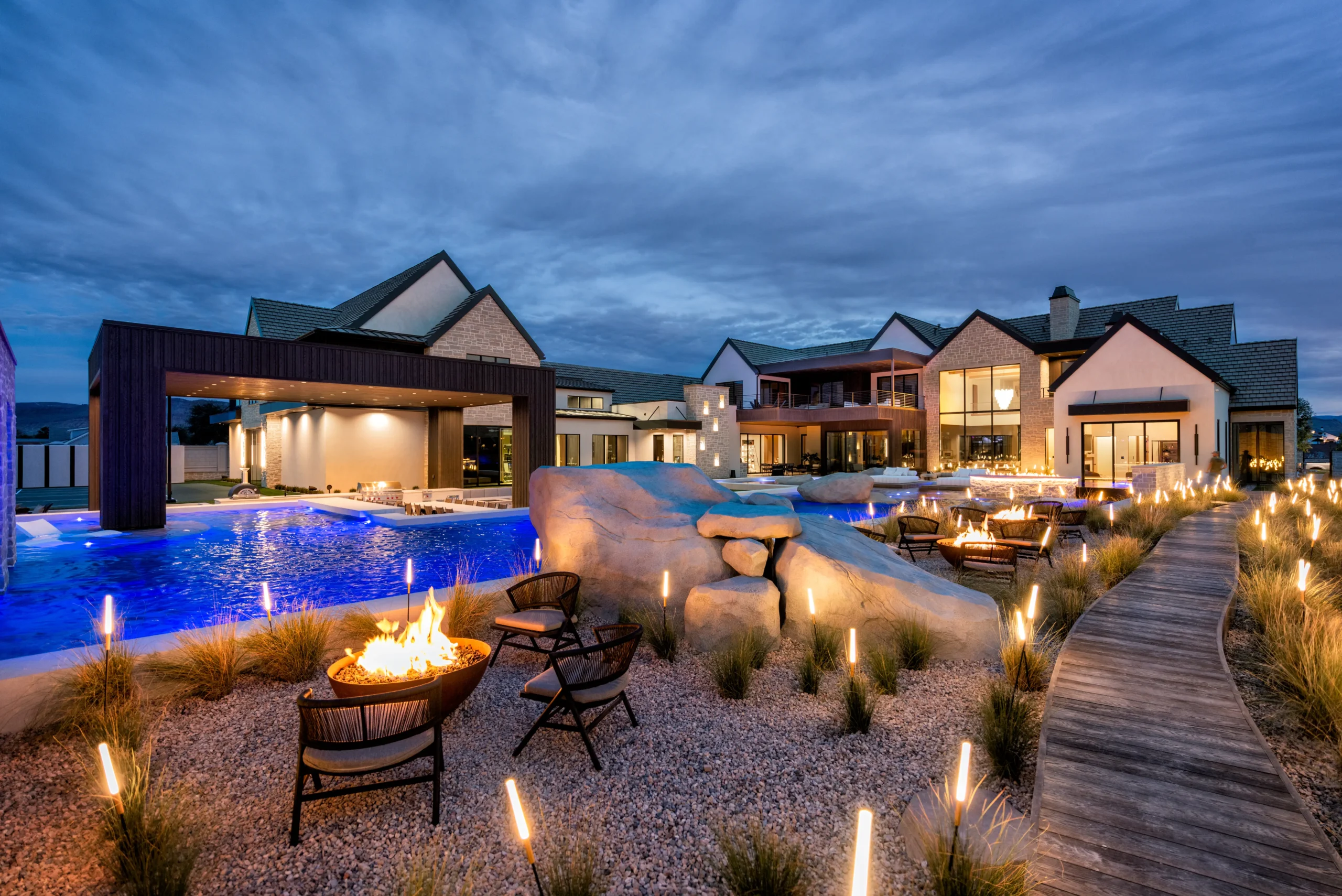
Where should you put outdoor spotlights in your yard?
Outdoor spotlights work best when they have a purpose, whether that’s highlighting trees and planting, drawing attention to interesting materials, or adding another layer of light throughout the yard.
Livingetc recently featured a Foxterra project in its guide to five of the best places to position garden spotlights, including an example of how we incorporated lighting within ornamental grasses to add another layer to the landscape after dark.
Read the full article on Livingetc

5 Spots to Position Spotlights in Your Garden That Will Instantly Elevate Your Lighting Scheme
Livingetc asked outdoor design and lighting experts where spotlights can make the biggest impact in a yard. The article covers five areas to consider, from trees and planting to sculptures, architectural details, and textured materials.
About the Feature
Outdoor lighting can completely change how much time you spend in your yard.
It can make a path easier to navigate, highlight details you might otherwise lose after dark, and give you enough light to keep using your outdoor spaces well into the evening.
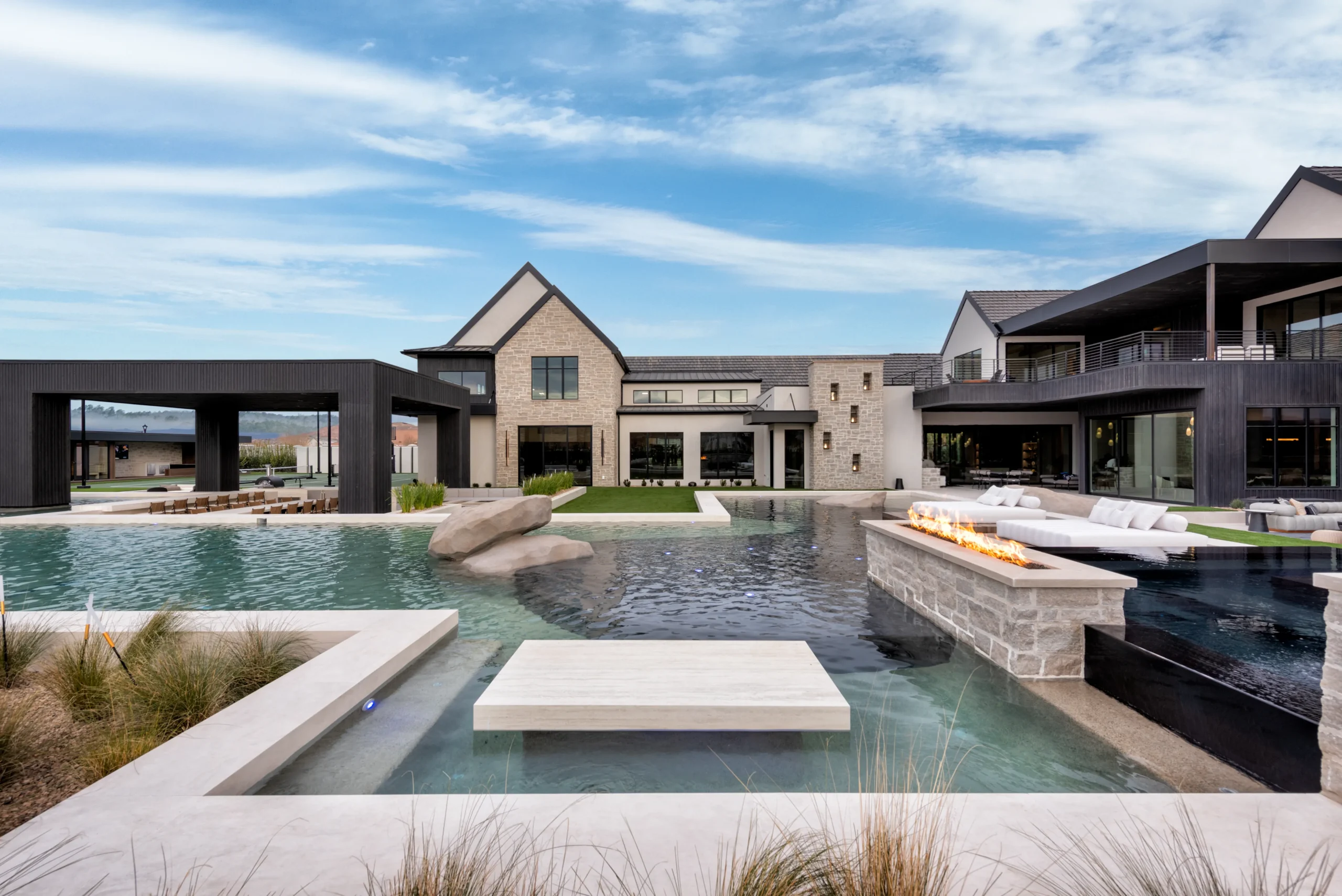
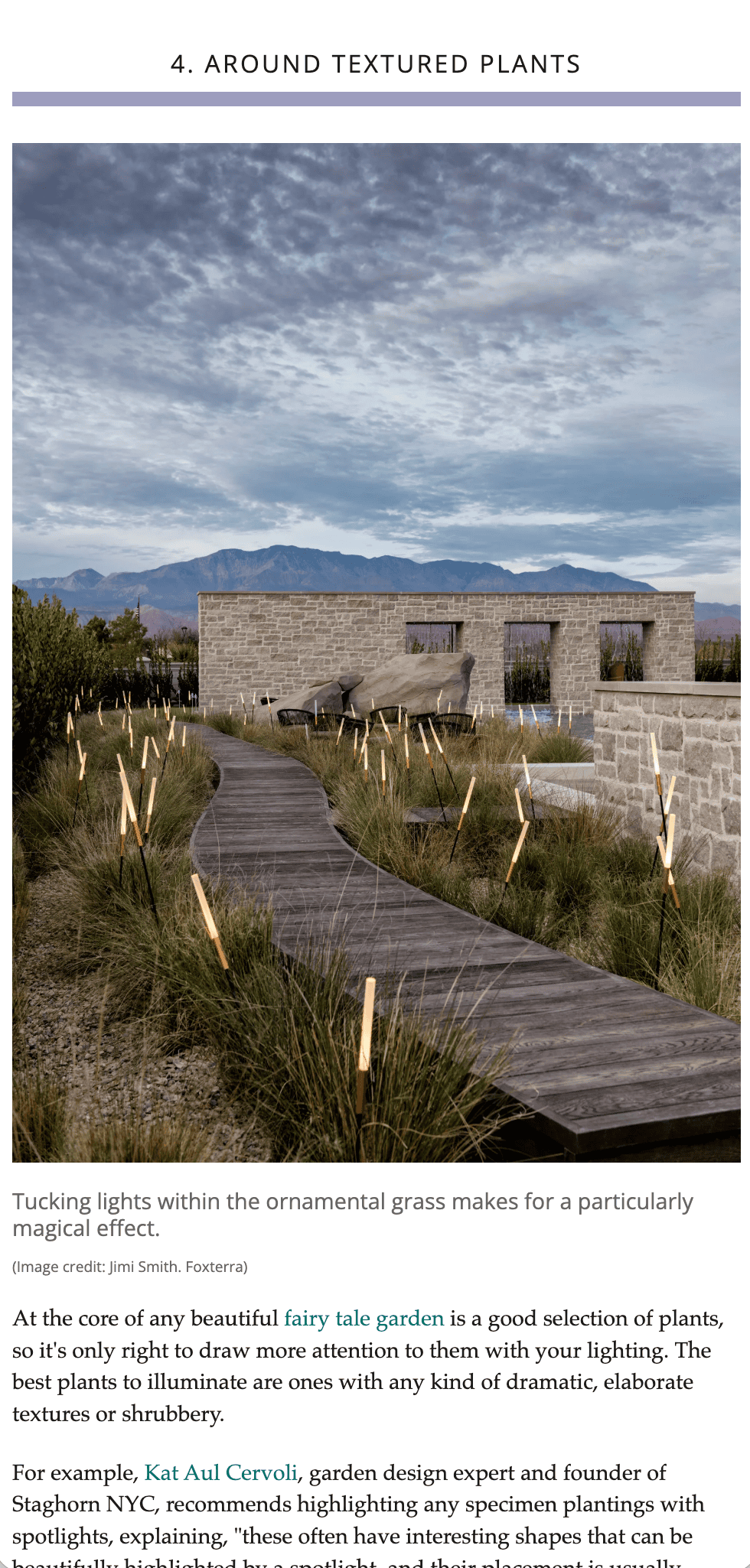
Livingetc recently explored different ways to use spotlights throughout a yard and featured Foxterra’s Terravue project as an example of incorporating lighting directly into the landscape.
At Terravue, we used slender, reed-inspired lights among ornamental grasses and along the boardwalk. During the day, they blend into the surrounding landscape. At night, they add another layer of light and detail as you move through the property.
What Was Covered
Livingetc’s article looks at where outdoor spotlights can have the most impact, including planting, trees, architectural details, sculptures, and textured materials.
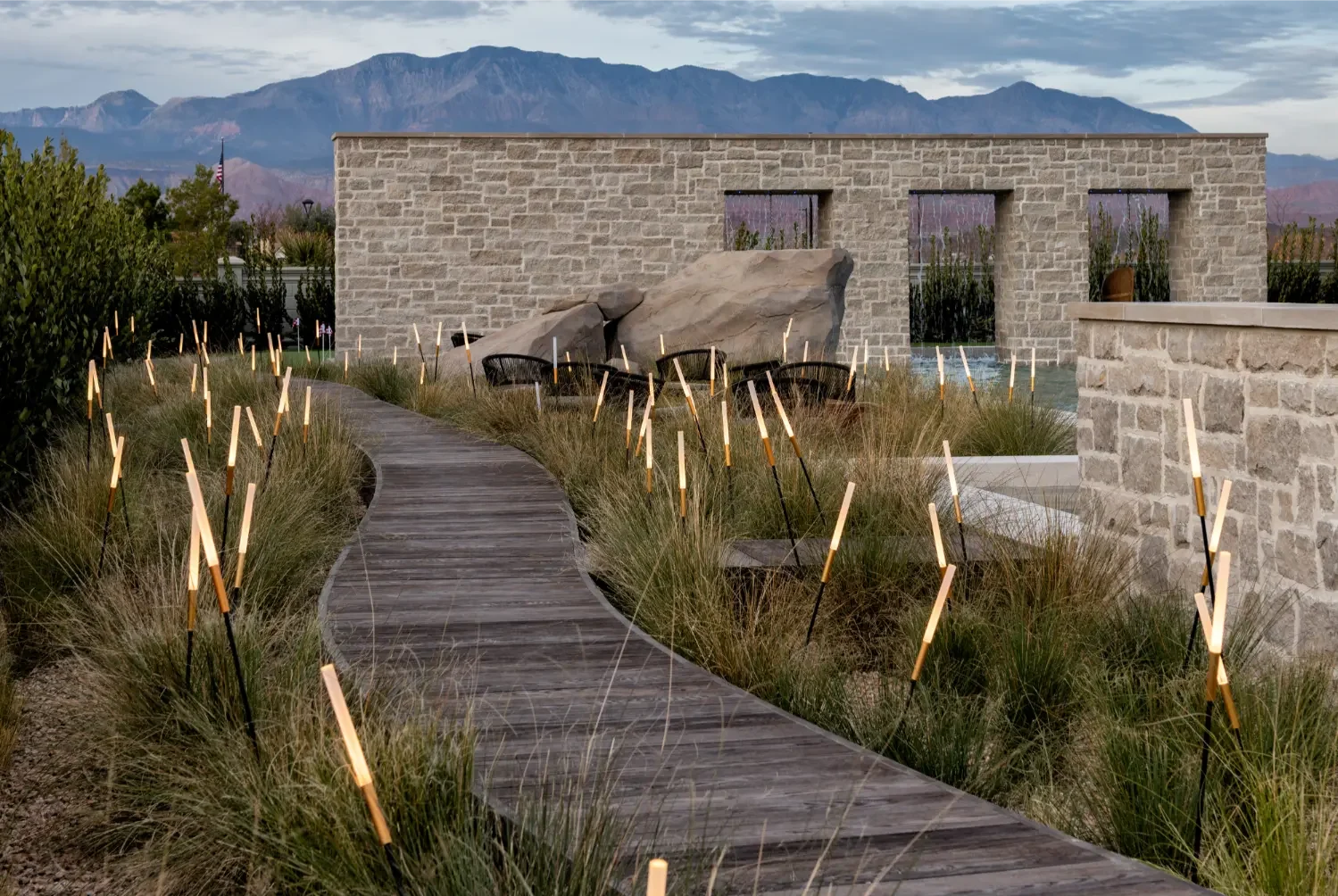
Foxterra’s Terravue project appears as an example of lighting within planting.
For us, that project also shows why outdoor lighting doesn’t always have to come from a traditional fixture.
The reed-inspired lights work especially well because they make sense with the landscape around them. Their height and shape echo the grasses, and placing them at different points along the boardwalk gives you light where you need it without lining the entire path with identical fixtures.
It’s a small detail, but those are often the decisions that make a yard feel completely different once the sun goes down.
Foxterra’s Perspective
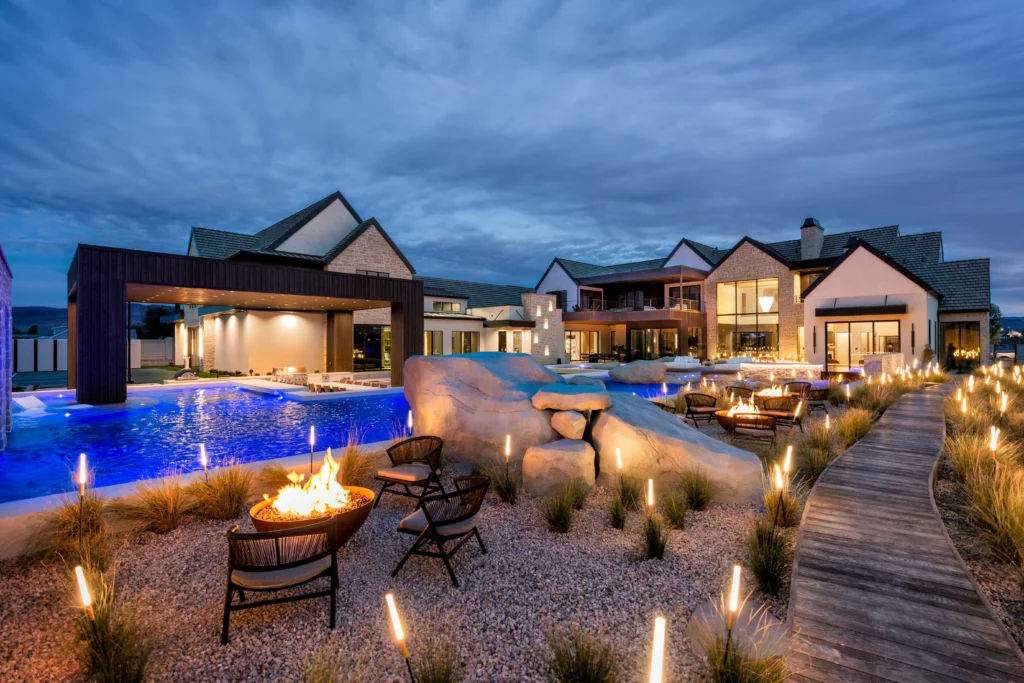
We want our clients to use their yards at night, not just during the day.
That requires more than adding enough lights to see.
We think about where people will walk, where they’ll sit, and what parts of the yard we still want them to notice after dark. Steps and pathways need enough light to move through comfortably, while areas like an outdoor kitchen or dining table need enough light to actually use them at night.
Then there are the details we want to highlight. That could be a mature tree, interesting planting, a water feature, or the texture of a wall.
But that doesn’t mean lighting everything.
Too much light can take away from the atmosphere you’re trying to create. We’re intentional about where we add it and where we don’t, so the yard is comfortable to use at night without feeling like everything is under a spotlight.
About Foxterra

Foxterra is a luxury outdoor design studio specializing in immersive backyard environments that blend architecture, landscape, and outdoor living. The firm creates custom outdoor spaces throughout the United States, with projects ranging from modern pool environments to resort-inspired entertainment destinations.
Frequently Asked Questions
How should you plan outdoor lighting for a backyard?
Think about what happens in each part of the yard after dark. Paths and steps need enough light for visibility, while dining areas, lounges, pools, planting, and architectural features may need different types and amounts of light. Planning those layers together helps avoid relying on one type of fixture throughout the entire property.
How do you keep outdoor lighting from feeling too bright?
You don’t have to illuminate every part of the yard equally. Use brighter, functional lighting where people need visibility and softer accent lighting where you want to highlight planting, materials, water, or architectural details. Leaving some areas darker also creates contrast.
When should outdoor lighting be planned?
Ideally, lighting should be considered while the rest of the yard is being designed. That gives you more flexibility to coordinate fixtures with planting, pathways, structures, gathering areas, electrical requirements, and the features you want to highlight at night.
Ready to Transform your yard?
Whether you’re planning a fire feature, pool environment, outdoor kitchen, or complete backyard transformation, Foxterra helps homeowners visualize what’s possible before construction begins.